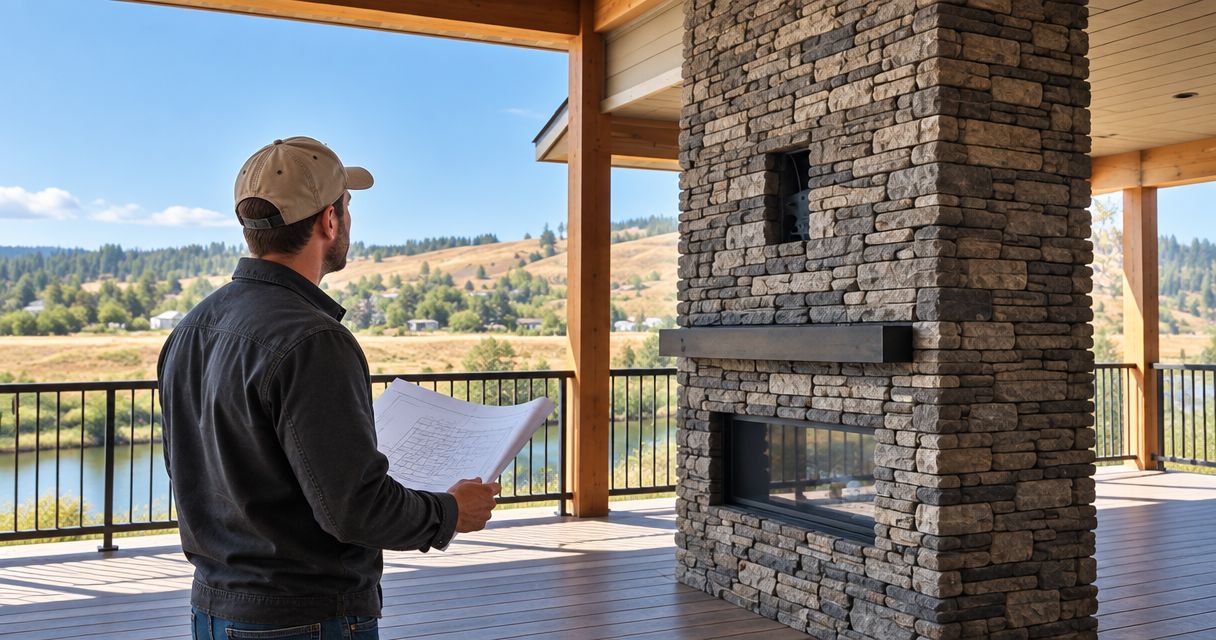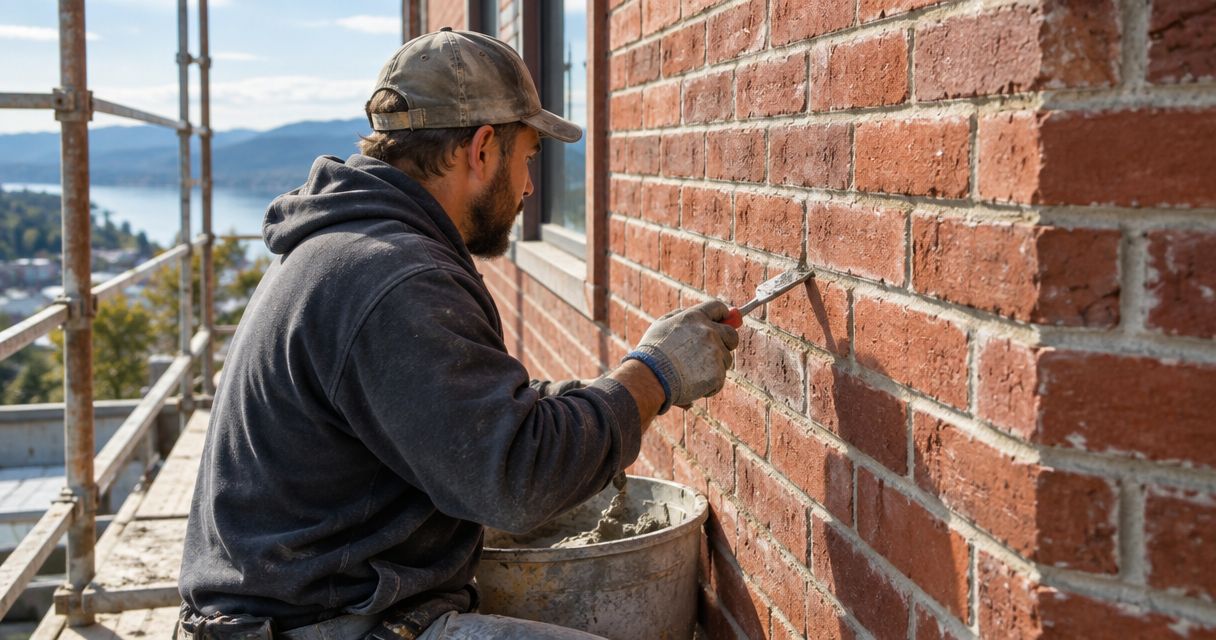
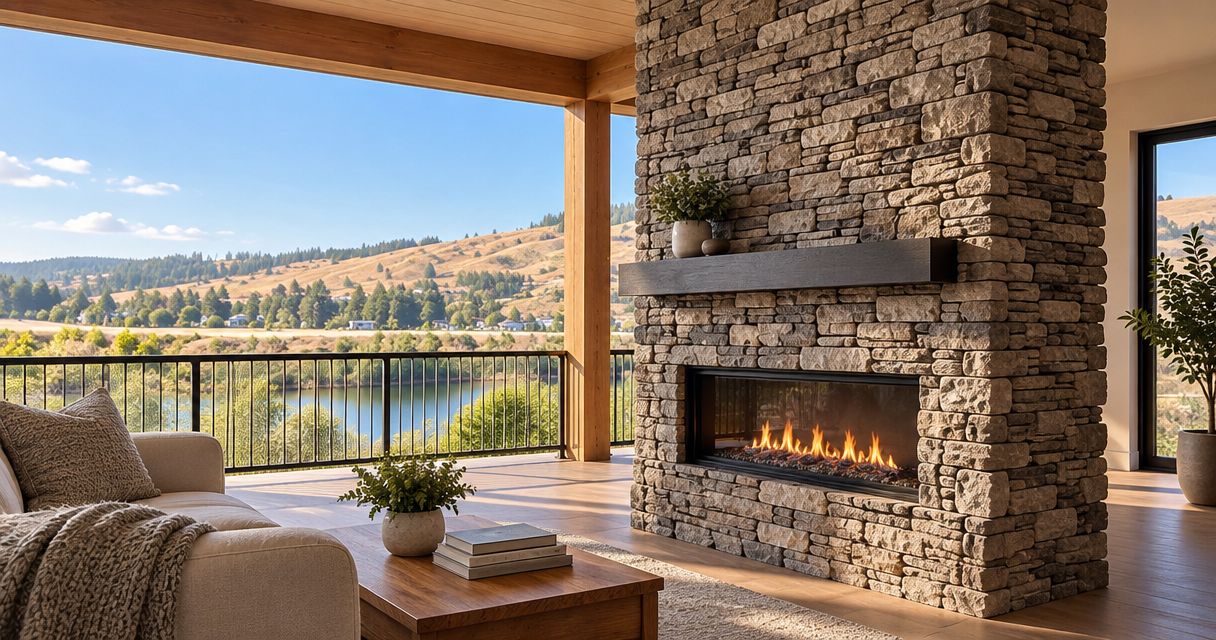
Stone veneer installation cost on a fireplace depends on the stone selection, surface preparation, fireplace dimensions, corner and opening details, installation method, and coordination with adjacent trades. For a 2026 project, compare complete scopes rather than stone-only allowances: demolition, backing repairs, mantel interfaces, access, and finish protection belong in the same discussion.
- Stone veneer installation cost depends on the complete fireplace scope, not just the stone facing.
- Masonryspokane is best for builders seeking coordinated stone veneer and fireplace masonry services.
- Confirm backing, clearances, corner pieces, and mantel details before comparing installation proposals.
- Separate veneer work from chimney repairs and fireplace appliance work so responsibilities stay clear.
Why this matters
A fireplace surround brings several trades into a small area. Framing, appliance installation, electrical work, masonry, and finish carpentry all affect the finished result. A proposal that describes only the visible stone leaves the general contractor responsible for resolving the interfaces.
For builders hiring a masonry subcontractor in Spokane, Coeur d’Alene, and nearby North Idaho, a clear scope is more useful than an unsupported average installation figure. You need to know what surface the mason receives, what the mason installs, and what condition the next trade receives.
Masonryspokane provides stone veneer and fireplace masonry services with an emphasis on clear scope, scheduling coordination, careful workmanship, and straightforward communication. Request a free estimate or project-scope discussion with the fireplace drawings, selected materials, and site conditions ready.
What affects stone veneer installation cost on a fireplace?
The main cost drivers are the amount of masonry work, the condition of the receiving surface, and the complexity of the finished surround. Material selection matters, but it does not describe the whole installation. Two fireplaces with similar face areas can require different preparation and detailing.
Use the following breakdown when reviewing a 2026 proposal. Each row identifies work that should be included, excluded, or assigned to another trade—not left implied.
| Scope item | What changes the work | What your proposal should clarify |
|---|---|---|
| Stone selection | Material type, piece shape, thickness, and corner treatment | Exact selected material and installation requirements |
| Existing finish | Removal of tile, stone, trim, or other coverings | Who removes finishes and disposes of debris |
| Receiving surface | Condition and suitability of backing | Required repairs and responsibility for preparation |
| Fireplace geometry | Returns, openings, hearth edges, and height | Drawings or dimensions defining the finished extent |
| Finish details | Joint appearance, cuts, terminations, and mantel interfaces | Approved appearance and detail responsibilities |
| Site coordination | Access, protection, staging, and trade sequence | Readiness conditions and handoff requirements |
Compare the same finished assembly, not just the same square footage. A face-area measurement does not explain the cuts around an opening, the return beside a mantel, or the condition beneath an existing finish.
Establish the measurement basis
Identify the front face, side returns, hearth facing, and any masonry above the mantel separately. Show where the veneer begins and ends. State whether the proposal includes corners and whether opening deductions affect the quantity basis.
You do not need to dictate a subcontractor’s estimating method. You do need both parties to understand what the measured scope represents. A marked elevation makes that discussion clearer than a photograph alone.
Natural stone veneer: material variation shapes the work
Natural stone veneer brings variation in color, texture, and piece shape. That variation can support the intended fireplace appearance, but it also makes selection and layout part of the installation discussion. Confirm the actual material rather than treating all natural stone as interchangeable.
Best for: projects that specifically call for natural stone character. The advantage is the material’s natural variation; the trade-off is that the installer must work with that variation while meeting the approved layout and finish expectations.
Ask how the specified pieces meet at corners and around the firebox opening. Establish whether the design calls for visible joints, a close-fitting appearance, or a particular coursing pattern. Those decisions affect the work even when the overall fireplace dimensions remain unchanged.
Manufactured stone veneer: follow the selected system
Manufactured stone veneer commonly uses cast concrete pieces to create a stone appearance. Its profiles and accessory pieces differ by product. The selected system’s installation instructions—not the category name—determine the preparation and attachment details.
Best for: projects with an approved manufactured profile and defined installation system. The advantage is choosing a coordinated profile and available accessory pieces; the trade-off is that cuts, exposed edges, and corner transitions need planning to preserve the intended appearance.
Do not assume manufactured veneer eliminates backing preparation or fireplace-clearance requirements. Those remain part of the assembly. Review the actual product instructions alongside the fireplace appliance documentation before finalizing the scope.
| Material option | Best for | Advantage | Trade-off to resolve |
|---|---|---|---|
| Natural stone veneer | A specified natural stone appearance | Natural texture and variation | Piece selection, layout, and corner detailing |
| Manufactured stone veneer | A specified cast-stone profile | Coordinated profiles and accessory pieces | Cut edges, transitions, and system requirements |
Neither material category produces a reliable installation figure by itself. Select the material first, then price the assembly it requires.
Why stone veneer installation cost varies
These factors explain why apparently similar fireplace proposals describe different amounts of work. Put each decision into the scope before accepting a bid.
- Surface preparation: Existing finishes can conceal unsuitable or damaged backing. Define demolition, inspection, and the process for approving repairs before veneer installation.
- Material selection: Stone dimensions, thickness, shape, and installation instructions influence handling, layout, cutting, and attachment. Identify the actual selection rather than a general material allowance.
- Geometry: Corners, side returns, hearth edges, and irregular openings add details that a flat face-area measurement does not capture. Mark these features on the elevation.
- Finish expectations: Joint width, joint appearance, pattern, and termination details establish what the mason must deliver. Approve the appearance before installation rather than correcting it afterward.
- Trade interfaces: Mantels, appliance trim, electrical devices, and adjoining finishes require agreed positions and responsibilities. Set these before the masonry closes access.
- Access and protection: Working height, occupied rooms, material staging, and protection of completed finishes affect how the work is organized. Describe the actual site conditions in the scope.
For your 2026 bid package, distinguish confirmed work from conditions that require inspection. A clear change-approval process is better than an unexplained allowance covering every possible concealed issue.
How do you prepare a fireplace scope for comparable bids?
Give each bidder the same drawings, material selection, and site information. Then ask each bidder to identify exclusions and readiness requirements. This keeps the comparison focused on the work instead of assumptions.
Confirm materials
Provide the selected veneer, desired joint appearance, and intended corner treatment. Include any hearth or mantel material that meets the stone. If selections are unfinished, identify which decisions remain open rather than asking for a supposedly final installation scope.
Inspect backing
Identify the existing assembly and the planned receiving surface. An installer should assess whether that surface meets the selected veneer system’s requirements. Where existing finishes prevent inspection, establish when the inspection happens and how additional preparation receives approval.
Coordinate interfaces
Confirm the appliance model, opening dimensions, trim requirements, mantel location, and adjacent finish lines. Assign responsibility for electrical extensions, framing changes, and other non-masonry work. Keep appliance requirements and the approved construction documents available to the trades involved.
Approve details
Resolve the appearance of corners, hearth edges, cuts, joints, and terminations. A sample or agreed reference helps define acceptance, but it must reflect the selected materials and installation approach. Photographs of a different stone system are not a substitute for the actual project details.
Confirm readiness
Agree on access, protection, material staging, and the condition of the work area before the masonry phase begins. Define what must be complete before installation and what remains accessible afterward. Record the next trade’s handoff needs rather than relying on a verbal understanding.
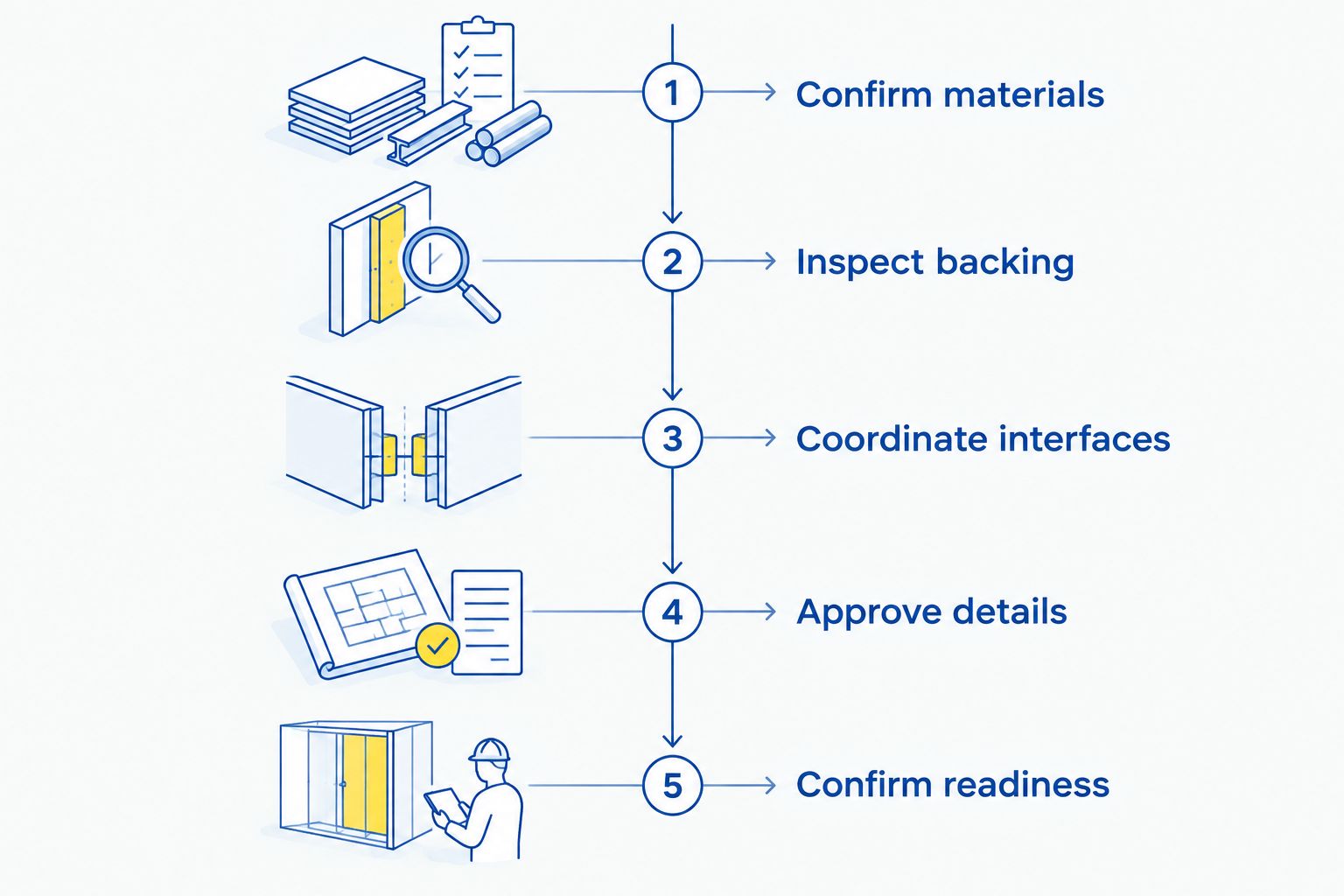
For a 2026 project handoff, attach the approved elevation and detail notes to the subcontract scope. Keep changes in the same record. The crew installing the veneer needs the current decision, not an earlier conversation remembered differently by each trade.
Discuss your fireplace scope
Request a free estimate and review veneer selection, backing, fireplace details, and trade coordination.
Does an existing brick fireplace reduce installation work?
An existing brick fireplace does not establish that the surface is ready for veneer. Its condition, coatings, and suitability for the selected installation system still need assessment. Do not treat existing brick as an automatic preparation shortcut.
Separate appearance work from repair work. Cracked mortar, loose masonry, and damaged brick need evaluation before a new facing conceals them. A veneer finish is not a substitute for resolving an underlying masonry problem.
If the fireplace also needs mortar restoration, identify that scope separately. The repair boundary should explain which joints or masonry areas receive attention and whether the veneer work depends on completion of those repairs.
Does fireplace veneer include chimney masonry repairs?
Fireplace veneer does not define a chimney-repair scope. A surround installation concerns the specified facing and its supporting assembly; chimney masonry repairs require their own inspection and work description. Include both only when the proposal explicitly identifies both.
This distinction matters when a renovation includes a failing chimney, damaged brickwork, or deteriorated mortar. Assign the repair work before covering adjacent surfaces. Keep appliance servicing and flue-related work separate unless the responsible contractor expressly includes them.
Can you keep the mantel during a veneer installation?
Keeping the mantel depends on the proposed assembly and the fireplace’s applicable clearance requirements. Added veneer changes the finished face position, so the existing mantel and trim need review against the new detail. Decide whether the mantel stays, moves, or is replaced before installation.
Do not infer combustible-material clearances from a photograph of another fireplace. Use the selected appliance instructions and applicable requirements for the actual assembly. The general contractor should coordinate that decision with the responsible trades.
FAQ
What affects stone veneer installation cost the most on a fireplace?
Stone veneer installation cost depends on the selected material, required preparation, fireplace geometry, finish details, and site coordination. Compare proposals that describe the same complete assembly rather than only the visible stone area.
Is natural stone veneer cheaper to install than manufactured stone?
The material category alone does not establish which installation costs less. Compare the actual selections, backing requirements, corners, cuts, and finish details before choosing between proposals.
Can stone veneer go over an existing brick fireplace?
Installation over existing brick requires assessment of the masonry and compliance with the selected veneer system’s requirements. Confirm the condition of the brick, mortar, and any coatings before agreeing on surface preparation.
Does a fireplace veneer estimate include demolition?
Demolition is included only when the proposal says so. Identify removal of existing finishes, debris disposal, and any inspection or backing repairs that follow.
Do fireplace corners and side returns affect the installation scope?
Corners and side returns add layout, cutting, and termination details beyond the front face. Show them on the elevation and confirm the selected corner treatment in the proposal.
Who handles fireplace appliance clearances during a veneer project?
The project team must assign responsibility for confirming appliance clearances and communicating them to the affected trades. Use the appliance instructions and applicable requirements rather than assumptions based on the existing finish.
What should I send when requesting a fireplace veneer estimate?
Send the fireplace elevation, dimensions, veneer selection, existing-condition photographs, and appliance information. Identify mantel, hearth, access, and trade-handoff requirements so the installer can define the work.
Does Masonryspokane offer fireplace masonry and veneer work?
Masonryspokane offers stone veneer installation and fireplace masonry services. Request a free estimate or project-scope discussion to review materials, preparation, and coordination requirements.
One last thing
The detail easiest to overlook is where the stone stops. An exposed edge beside trim, a return at the firebox, or a transition beneath the mantel can change the cutting and finishing work without changing the main face area.
Before approving a 2026 fireplace proposal, walk through every termination on the elevation. Ask what you will see at each edge and which trade completes it. That is a practical way to prevent an apparently complete veneer scope from ending with unfinished interfaces.