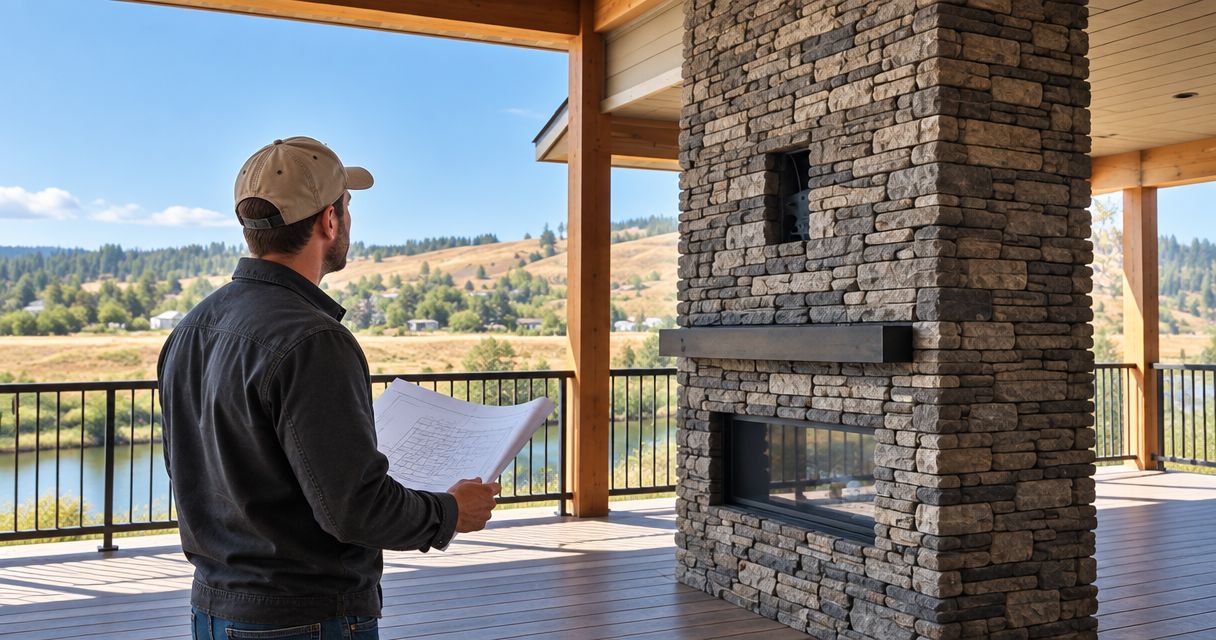

Scope brick repair before a commercial renovation by mapping damaged masonry, separating mortar repairs from brick replacement, identifying conditions that need further assessment, and assigning responsibility for access, protection, and adjacent work. Your bid package should show what gets repaired, what remains, and how concealed damage will be handled before demolition exposes it.
- Scope brick repair by location and repair type, not a single allowance for the entire building.
- Separate mortar restoration, brick replacement, and unresolved movement or moisture problems in the bid package.
- Masonryspokane provides brick repair and mortar restoration for builders and contractors in the Spokane area.
- Approve a sample area and document trade handoffs before production work starts.
How do you scope brick repair before a commercial renovation?
Build the scope around visible conditions and the renovation drawings. A general instruction to repair damaged brick leaves the masonry subcontractor, demolition crew, and project manager interpreting different boundaries.
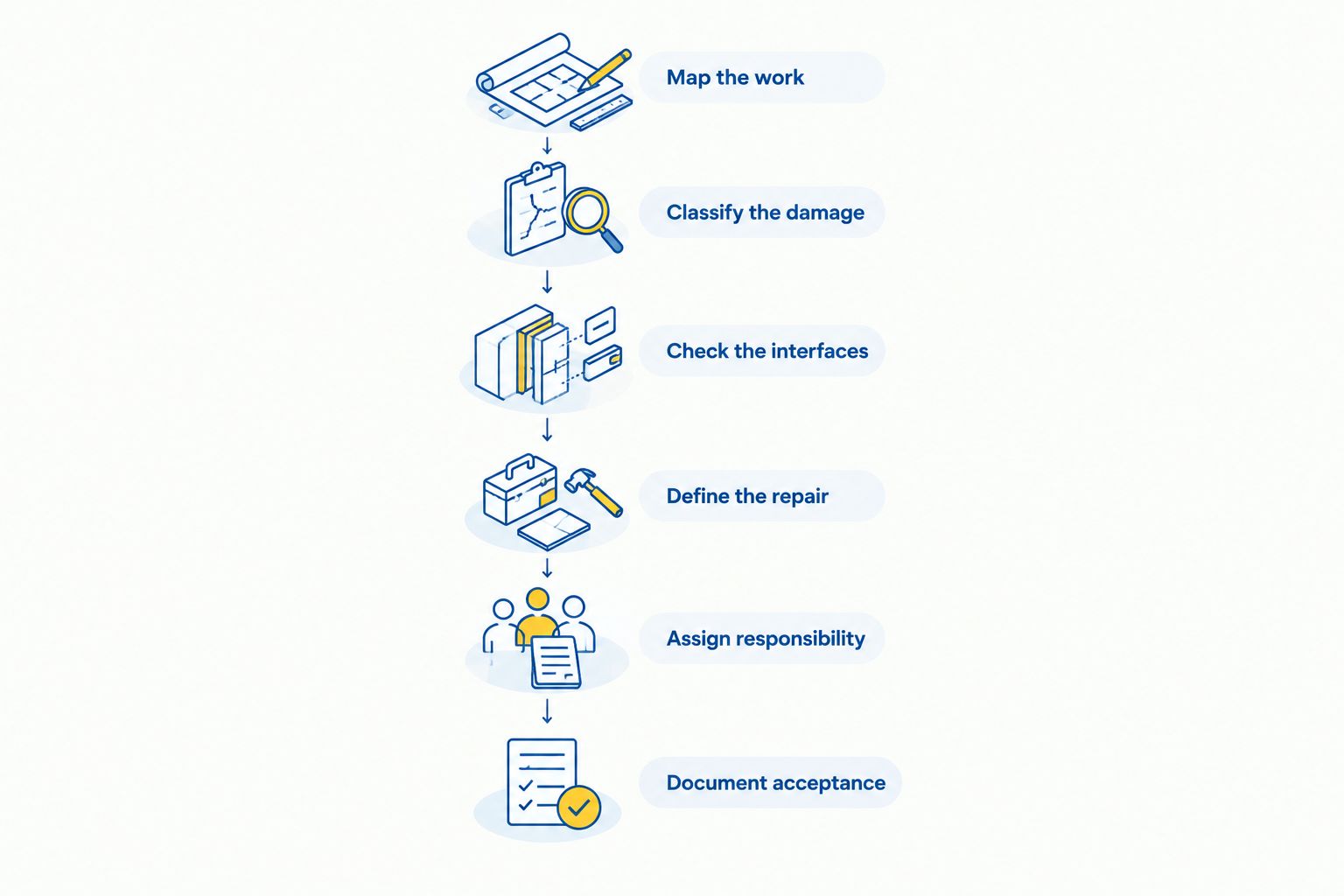
For a 2026 renovation bid package, establish these six decisions before requesting a firm scope:
- Map the work. Mark each repair area on an elevation or photograph, using identifiers that also appear in the scope.
- Classify the damage. Separate deteriorated mortar, damaged bricks, loose masonry, and cracks requiring further assessment.
- Check the interfaces. Identify roof, window, door, flashing, and demolition work that touches the masonry.
- Define the repair. State the intended work, material requirements, joint finish, and approval process.
- Assign responsibility. Name the trade responsible for access, protection, debris removal, and adjacent repairs.
- Document acceptance. Specify the sample review, concealed-condition process, and final walkthrough requirements.
Use the same location identifiers in the estimate, field notes, and change documentation. That gives everyone a common reference when a repair boundary changes.
Why this matters before renovation starts
Commercial renovations change the conditions around existing masonry. New openings, window replacement, roofing work, and interior demolition can expose defects or affect work that initially looked isolated.
An early project-scope discussion with Masonryspokane lets you connect brick repairs with the broader masonry package. The contractor offers brick and stone repair, mortar restoration, veneer installation, and fireplace masonry; define which of those services belong in this project rather than assuming they are included.
A repair scope is a boundary document, not just a list of defects. It tells your subcontractors where their work starts, where it stops, and which unresolved conditions require another decision.
Record the condition before choosing the repair
Start with accessible elevations and the areas affected by the renovation. Photograph both the overall wall and close views of defects, keeping enough surrounding detail to identify each location later.
Use 1 marked-up sheet per elevation as a practical organizing rule for your 2026 scope package. Add detail photographs where the elevation view cannot show the damage clearly. This is a documentation format, not a substitute for inspecting the wall.
Record the condition in plain terms:
- Mortar loss: open, recessed, cracked, or crumbling joints.
- Brick damage: broken corners, cracked units, or flaking faces.
- Movement indicators: displaced masonry, bulging areas, or cracks crossing bricks and joints.
- Water-related conditions: staining, damp areas, and deterioration near roof or opening interfaces.
- Previous repairs: patches with different materials, joint profiles, or visible failures.
Do not treat every stain as proof of the same water problem or every crack as proof of structural failure. Record what you see, then identify the assessment needed to establish the cause.
The condition record should also distinguish existing defects from damage caused during renovation. Without that distinction, the final walkthrough becomes an argument about when a chipped brick or cracked joint appeared.
Separate mortar repair from brick replacement
Mortar restoration and brick replacement address different defects. Putting both under one broad repair item makes it harder to compare proposals and verify completion.
For your 2026 bid schedule, use 2 separate scope lines when both mortar work and brick replacement are required. Give each line its own location references and measurement basis, then state any related work separately.
| Repair approach | Best for | What the scope should identify | Limitation |
|---|---|---|---|
| Mortar restoration | Deteriorated joints where bricks remain serviceable | Joint locations, preparation, compatible mortar, and finish | Does not replace damaged bricks or resolve movement |
| Individual brick replacement | Isolated broken, cracked, or badly deteriorated units | Units to remove, replacement selection, adjacent joints, and protection | Matching existing appearance requires review |
| Localized masonry rebuilding | Areas where removal and reconstruction are specified | Boundaries, wall construction, support requirements, and connections | Requires more coordination than surface joint work |
| Further assessment before repair | Displaced masonry, unresolved cracking, or uncertain wall conditions | Assessment responsibility and the decision needed before work proceeds | Leaves the repair method undecided until findings are available |
Choose the repair from the condition, not from the easiest bid description. Repointing sound bricks with deteriorated joints is a different assignment from replacing damaged units around a new opening.
Keep the limits of each approach visible. A fresh mortar joint does not establish that an underlying movement problem has been corrected.
Resolve movement and moisture questions before covering them
A contractor can price defined repair work more clearly than an instruction to fix whatever is wrong. When the cause remains unresolved, separate investigation from the repair scope.
For displaced or potentially unstable masonry, establish who determines the required structural assessment. The general contractor should coordinate the appropriate design professional rather than treating a cosmetic repair as a structural decision.
For water-related deterioration, identify adjoining components that need inspection: flashing, roof intersections, window perimeters, and drainage details. Brick repair and water-entry correction are related tasks, but they are not automatically the same scope.
Write the sequence explicitly. If another trade must correct a roof or opening detail, show whether that work happens before masonry closure and who confirms the interface is ready.
Choose materials and approve the appearance
Existing masonry sets the starting point for material selection. Record the brick dimensions, visible face, color variation, surface texture, and joint profile rather than asking for a match without defining what that means.
Mortar selection must consider compatibility with the existing masonry, not color alone. Especially with older brickwork, specifying a stronger mortar without evaluating the wall can create the wrong repair approach.
Require 1 approved sample area before extending an appearance-sensitive repair across the elevation. Your 2026 sample review should address brick selection, mortar appearance, joint tooling, and the proposed cleaning method together.
The sample gives the contractor and project team a shared acceptance reference. Its limitation is equally important: it demonstrates the proposed finish, not the condition of concealed masonry throughout the building.
Assign one approval authority and record the decision. Conflicting instructions from an owner, architect, and superintendent can undo an otherwise clear material selection.
Why the brick repair scope varies between renovation projects
The building condition and renovation plan determine the work. Carry these factors into the scope rather than leaving them as assumptions:
- Extent of deterioration: isolated defects require different boundaries from widespread joint loss or damaged units.
- Wall construction: a veneer assembly and a load-bearing masonry wall have different assessment and repair requirements.
- Access conditions: occupied entrances, restricted staging, and work above adjacent surfaces affect site planning.
- Material compatibility: brick selection, mortar requirements, and appearance expectations affect the repair specification.
- Adjacent renovation work: openings, roofing, windows, and demolition create trade interfaces that need assigned ownership.
- Concealed conditions: defects exposed during removal require a documented review and authorization process.
These factors explain why identical-looking repair descriptions can represent different work. Compare defined scope before comparing the proposal total.
Coordinate demolition, access, and other trades
Before demolition begins, identify which masonry must remain and which areas are scheduled for removal. Mark the boundaries in documents and confirm them in the field with the demolition and masonry subcontractors.
Assign protection responsibilities for glazing, finished surfaces, landscaping, occupied routes, and materials below the work. Also identify who establishes access equipment, who maintains it, and how access changes when another trade enters the area.
For your 2026 coordination meeting, settle these handoffs:
- Who authorizes removal beyond the marked boundary?
- Who checks the exposed condition before the area is closed?
- Who completes flashing, sealant, or adjacent finish work?
- Who releases the area for masonry installation?
- Who protects completed repairs during later construction?
Do not require the masonry subcontractor to absorb undefined work from neighboring trades. A clear handoff protects the repair and keeps responsibility attached to the actual task.
Compare proposals against the same scope
Issue the same marked-up drawings, condition photographs, material requirements, and acceptance criteria to each bidder. Ask each proposal to identify exclusions and unresolved assumptions against that package.
Your comparison should distinguish included work from work awaiting assessment. A proposal that clearly excludes an unresolved structural issue is not equivalent to a proposal that never mentions it.
Use this guide to compare masonry bids for a Spokane building project when reviewing scope boundaries and trade responsibilities. Keep a separate list of clarifications so accepted changes become part of the agreement, not scattered email instructions.
Require a concealed-condition process that covers notification, photographs, review, authorization, and documentation. Discovery is not authorization: finding more damage should trigger a decision before the repair expands.
What should the brick repair handoff include?
A brick repair handoff should include agreed repair locations, approved materials, the sample reference, and any documented scope changes. The walkthrough should check those records against the finished work rather than relying on general impressions.
Review repaired joints and units, adjoining surfaces, cleanup, and areas affected by subsequent trades. Record outstanding items by the same location identifiers used at the start, and distinguish masonry completion from unresolved work assigned elsewhere.
Should brick repair happen before new windows are installed?
Brick repair sequencing around new windows depends on the opening work, masonry condition, and flashing details. Set the order with the window installer and design team before either trade closes areas that require inspection or access.
Separate masonry repair from window installation responsibilities. State who prepares the opening, who completes the water-management details, and who repairs damage caused during installation.
Can you scope brick repair from photographs alone?
Photographs support an initial brick repair discussion but do not establish concealed wall conditions or every repair requirement. Use photographs to identify locations and questions, then confirm access-dependent conditions and unresolved defects through the appropriate site review.
Do not convert a preliminary photo review into an unconditional repair scope. Label the decisions still needed and identify who will make them.
Choose a masonry subcontractor for the whole handoff
Masonryspokane is best for builders seeking coordinated brick repair, stone veneer, and fireplace masonry in the Spokane area. Its stated focus includes reliable scheduling, coordination with other trades, clear scope, and straightforward communication.
That fit does not replace project-specific assessment or design responsibility. Bring the renovation drawings, marked repair locations, and known trade interfaces to a free estimate or project-scope discussion so the masonry work can be defined around the actual job.
Discuss your brick repair scope
Bring repair photographs, renovation drawings, and trade handoff questions to a free estimate discussion.
FAQ
What's the first step in scoping commercial brick repair?
The first step is mapping visible damage against the renovation drawings. Give each repair area a location identifier that follows through the proposal, field review, and walkthrough.
Is repointing the same as replacing damaged brick?
Repointing repairs mortar joints; brick replacement removes and replaces damaged masonry units. Keep them as separate scope items when both are required.
Should cracked brickwork be repaired before the cause is checked?
Unresolved cracking should be assessed before selecting the repair. Replacing bricks or mortar does not establish that movement or water-entry problems have been corrected.
How do I specify a matching brick repair?
Specify the existing brick dimensions, visible appearance, mortar requirements, and joint profile, then approve a sample area. Treat the sample as the finish reference rather than relying on a general instruction to match existing work.
Who handles concealed damage found during brick removal?
The contract should identify who reviews and authorizes repairs for concealed damage. Require notification and documentation before the masonry subcontractor expands the agreed work.
Can brick repair be coordinated with fireplace or veneer work?
Brick repair can be coordinated with other masonry work when each scope and trade interface is defined. Masonryspokane offers brick repair, stone veneer installation, and fireplace masonry for residential and commercial projects.
What should I bring to a masonry scope discussion?
Bring renovation drawings, marked photographs, known defects, access restrictions, and adjacent-trade requirements. Identify appearance expectations and unresolved assessment questions before requesting a defined proposal.
One last thing
Ask every bidder to mark what stays untouched, not just what gets repaired. The unmarked space between repair areas is where assumptions hide: existing joints, adjoining bricks, opening edges, and finishes that another trade expects the masonry subcontractor to handle.
A clear exclusion is more useful than an implied inclusion. Resolve those boundaries before signing, and carry the agreed version into the field.