Masons choose mortar for repointing brick by assessing the existing brick, original mortar, moisture exposure, and joint profile—not by picking the strongest bagged mix. The replacement must work with the wall’s strength and drying behavior, with color and texture checked in a sample panel before full production. For a 2026 project, your subcontract scope should name the proposed mortar, preparation method, curing protection, and approval process; repointing alone does not correct failed flashing or structural movement.
- Repointing brick requires compatible mortar, not maximum compressive strength; assess the existing wall before specifying a mix.
- Approve mortar color, aggregate texture, and joint profile together in a sample panel.
- Separate mortar restoration from damaged-brick replacement, flashing repairs, and structural work.
- Masonryspokane serves builders needing brick repair and mortar restoration with clear scope and trade coordination.
Why this matters
Mortar choice affects more than appearance. A hard, dense repair can change how an older brick wall handles moisture and movement, putting vulnerable brick at risk while the new joints remain intact.
For builders coordinating a 2026 renovation, the decision belongs before finish selections and production scheduling. Masonryspokane provides brick repair and mortar restoration for homeowners and contractors across the Inland Northwest, with straightforward scope discussions and coordination with other trades. Establish what the masonry repair includes before another trade covers adjacent work.
How do masons choose mortar when repointing old brick?
The right mortar matches the wall’s needs, not the contractor’s strongest available mix. Start with representative areas of original construction, distinguish them from later repairs, and evaluate the brick and mortar together.
The National Park Service’s Preservation Brief 2: Repointing Mortar Joints in Historic Masonry Buildings is a practical reference for historic masonry. Its guidance covers mortar compatibility, joint preparation, workmanship, and curing—not just the appearance of finished joints. Use it when developing a 2026 restoration scope, alongside the project’s specifications and professional assessment.
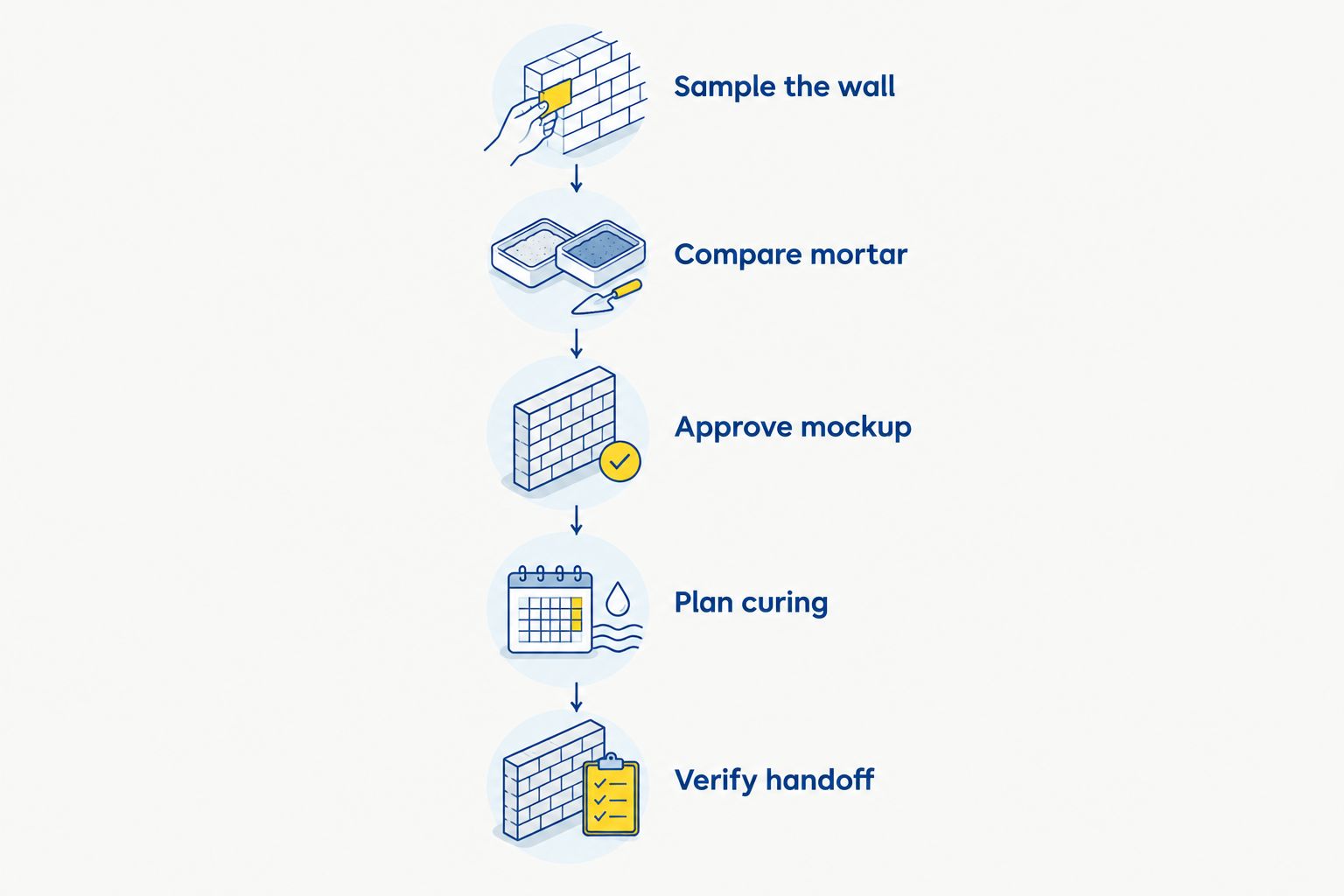
1. Sample the wall
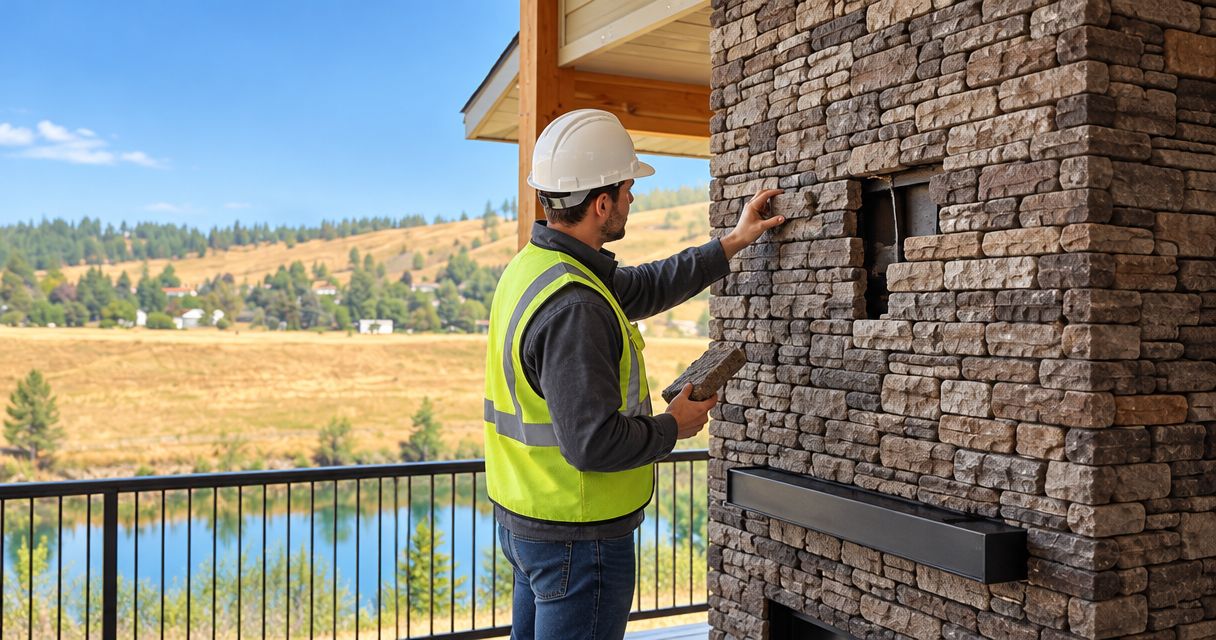
Ask the mason to identify sound original joints, deteriorated areas, and previous patching. A later cement-rich repair is not automatically the correct reference for the rest of the building.
Record brick condition, joint width, surface texture, and signs of moisture entry. Look beyond the easiest elevation to reach: sheltered brickwork and an exposed chimney can have different repair needs even on the same property.
Where the building is historically significant or the existing mortar is uncertain, include mortar analysis in the specification process. Analysis helps identify binder and aggregate characteristics; the restoration specification still requires interpretation of the wall’s condition and exposure.
2. Compare mortar
Review the proposed binder, sand, strength characteristics, and moisture behavior against the existing masonry. The mason should explain why the selected mortar suits the brick, not simply describe it as a standard repair mix.
Sand affects the finished joint’s color and texture as well as its physical properties. Matching pigment alone does not reproduce a coarse, visibly sandy historic joint. Evaluate the binder and aggregate together rather than treating color as a separate finishing decision.
3. Approve mockup
Require a sample panel in a representative location before authorizing full production. Review the prepared joint, mortar placement, joint profile, brick-edge condition, and finished appearance.
Do not judge mortar color only while it is wet. Allow the panel to dry and develop its finish before approval, and document the accepted materials and workmanship. Keep the approved panel available as the reference for subsequent work.
4. Plan curing
Agree on protection from rapid drying, rain, and freezing conditions before mobilization. Mortar needs curing conditions appropriate to its binder; protection is part of the work, not an optional cleanup item.
Coordinate access, temporary coverings, and adjacent-trade activities. Avoid a sequence that exposes fresh joints to washing, impact, or incompatible treatments before the masonry contractor releases the area.
5. Verify handoff
At the walkthrough, compare completed work with the approved panel and written scope. Check mortar placement, joint finish, brick damage, cleanup, and unresolved water-entry conditions.
Record exclusions and follow-up responsibilities. A repointing subcontract should not silently become responsibility for chimney flashing, roofing, or structural repairs that another trade must perform.
For restoration-specific planning, use the guide to repointing brick for historic renovations in Spokane. Keep the building’s existing masonry—not a generic product label—as the starting point.
Which mortar approaches should the subcontractor compare?
Binder families are options to evaluate, not interchangeable upgrades. Each has useful characteristics and limitations; suitability depends on the existing masonry and the proposed application.
| Mortar approach | Best for | Useful characteristic | Limitation to address |
|---|---|---|---|
| Lime-putty mortar | Historic work where assessment supports a nonhydraulic lime binder | Supports a softer, vapor-permeable repair when appropriately specified | Requires careful curing and protection; develops strength through carbonation |
| Hydraulic-lime mortar | Restoration work where a hydraulic set is appropriate | Sets through reaction with water as well as subsequent carbonation | Hydraulic strength varies; the binder still needs compatibility review |
| Portland cement-lime mortar | Masonry whose properties support the specified cement-lime mix | Provides a defined mix framework for suitable construction | An overly strong or dense selection can be inappropriate for soft historic brick |
Ask for the selection rationale, not a blanket recommendation for one binder. A mortar that works on newer masonry does not automatically belong in an older wall, and a historic-looking finish does not prove compatibility.
Lime-putty mortar: check curing requirements
Lime-putty mortar deserves consideration where investigation identifies a compatible historic lime-based assembly. Its suitability comes from the wall assessment, not from the building simply looking old.
The practical trade-off is curing and protection. If a subcontractor proposes this approach, ask how the work will be protected and how access will remain available during curing. Build those requirements into the sequence rather than expecting the mason to fit them around an unchanged finish schedule.
Hydraulic-lime mortar: specify the binder
Hydraulic-lime mortar is not one uniform material. The binder’s properties matter, so a scope that says only lime mortar leaves an important decision unresolved.
Ask the subcontractor to identify the proposed binder and explain its suitability for the brick and exposure. Its hydraulic set can serve an appropriate restoration specification, but that does not remove the need to evaluate strength, drying behavior, aggregate, or joint preparation.
Cement-lime mortar: strength is not the verdict
ASTM C270’s laboratory property specification lists minimum compressive strengths of 350 psi for Type O and 750 psi for Type N, measured at 28 days. These values describe standardized laboratory criteria, not a promise of installed performance in an existing wall.
The comparison explains why selecting a mortar type matters. It does not establish that Type O belongs in every historic wall or that Type N is suitable wherever greater strength seems desirable.
For repointing brick, require compatibility first. A designation, compressive-strength figure, or familiar bagged product cannot replace assessment of the original mortar, brick condition, and service exposure.
Why mortar selection varies between projects
Your 2026 specification should address the conditions that change the repair decision:
- Brick condition: Soft, weathered, or spalling units need assessment before specifying the surrounding mortar. Unsound brick can require replacement rather than repointing alone.
- Existing mortar: Original joints and later repairs can contain different binders. Identify which material represents the wall’s intended construction.
- Moisture exposure: Leaking flashing, defective caps, and persistent wetting affect the repair scope. New joints do not substitute for correcting water entry.
- Joint geometry: Width, depth, and profile affect preparation, placement, and appearance. Deep recesses or irregular joints require more than a surface color match.
- Wall use: Exterior brick, chimney masonry, and fireplace areas are not identical applications. Heat-exposed joints require a separate material decision from ordinary exterior repointing.
- Construction sequence: Access, curing protection, and adjacent-trade work affect execution. Resolve those interfaces before agreeing on the production sequence.
Does stronger mortar make old brick repairs last longer?
Stronger mortar is not automatically better for old brick. An incompatible repair can concentrate damage in the masonry units rather than allow the joints to accommodate deterioration and movement.
Ask the mason to explain the strength relationship between the replacement mortar, existing mortar, and brick. Treat compatibility as the acceptance criterion; do not turn a higher compressive-strength number into a purchasing advantage.
How deep should old mortar be removed before repointing?
The National Park Service recommends removing deteriorated mortar to a minimum depth of 2 to 2.5 times the joint width, with deeper removal where needed to reach sound material. A thin surface coating is not an adequate substitute for a properly prepared joint.
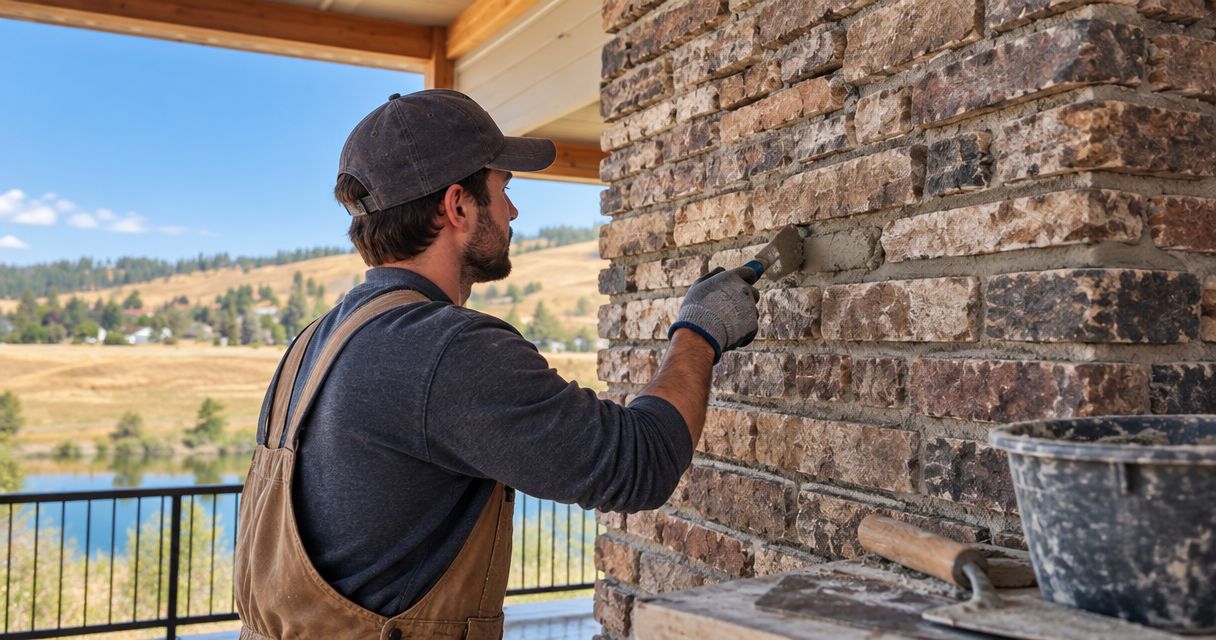
Preparation also has to preserve brick edges. Ask how the subcontractor will select tools, control removal, clean the joint, and address locations where powered equipment risks damaging the units. Agree on the method in the sample area before production.
What should a 2026 repointing subcontract include?
A 2026 repointing subcontract should define assessment, preparation, mortar selection, placement, protection, and acceptance. Give the mason enough information to price and schedule the same work you intend to receive.
Use a scope checklist that separates the masonry repair from related building work:
- Repair boundaries: Identify elevations, chimney faces, openings, and other included areas. Mark isolated repairs separately from broader joint restoration.
- Brick replacement: Define how damaged units will be identified and approved. Do not assume repointing includes replacing every spalled brick.
- Mortar specification: Record the proposed binder, aggregate, and matching requirements. Include the basis for compatibility and any required analysis.
- Sample approval: Identify who approves the panel and what counts as acceptance. Review both appearance and workmanship.
- Preparation and protection: Include joint removal, cleaning, curing arrangements, and protection of adjacent finishes.
- Trade interfaces: Assign flashing, roofing, structural review, and other excluded work. State what must be completed before the mason starts or returns.
- Final walkthrough: Compare the completed work with the accepted panel and record outstanding items before project handoff.
Masonryspokane is best for builders needing brick repair and mortar restoration coordinated with other trades. Its stated approach emphasizes clear scope, careful workmanship, and straightforward communication. For a building that needs structural assessment or specialized historic-material analysis, arrange those inputs as part of the project rather than treating the masonry subcontract as a substitute.
Request a free estimate or project-scope discussion with photographs, repair locations, and known water-entry issues ready. That gives the conversation a useful starting point without assuming a particular mortar or repair method in advance.
Discuss your brick repair scope
Review mortar restoration, repair boundaries, and coordination with adjacent trades.
FAQ
What's the best mortar for repointing old brick?
The best mortar for repointing old brick is compatible with the existing brick and original mortar. Assess binder, aggregate, strength, and drying behavior before approving a mix; there is no universal best mortar for every old wall.
Is Type N mortar better than Type O for repointing?
Type N is not automatically better than Type O for repointing. ASTM C270 lists laboratory minimum compressive strengths of 750 psi for Type N and 350 psi for Type O at 28 days, but wall compatibility—not the higher number—controls selection.
Can a mason match the color of old mortar?
A mason can develop a mortar match through binder and aggregate selection and a sample panel. Judge the dried sample's color, texture, and joint profile together rather than approving a wet color alone.
Can repointing fix a leaking brick chimney?
Repointing addresses defective mortar joints, not every source of chimney leakage. Assess flashing, caps, damaged brick, and other water-entry paths before assigning the repair scope.
Should the same mortar be used inside a fireplace?
Ordinary exterior repointing mortar is not a blanket specification for heat-exposed fireplace joints. Separate the firebox or other heat-exposed work from exterior chimney masonry and specify materials for the actual application.
What should I ask a masonry subcontractor before hiring?
Ask how the masonry subcontractor will assess compatibility, prepare joints, approve a sample, protect curing work, and coordinate adjacent trades. Require clear repair boundaries and named responsibilities for excluded work.
Does Masonryspokane handle brick repair and mortar restoration?
Masonryspokane provides brick repair and mortar restoration for homeowners and contractors across the Inland Northwest. Request a free estimate or project-scope discussion to establish the repair boundaries and trade-coordination requirements.
One last thing
Save the approved mortar information, not just a photograph of the finished wall. A photograph records appearance but does not identify the binder, aggregate, preparation method, or curing requirements.
At your 2026 project handoff, retain the accepted sample location, mortar specification, and any documented changes with the building records. Those details give the next contractor a starting point based on the actual repair rather than another round of guesses. For repeat projects, make that record part of your masonry closeout requirements.