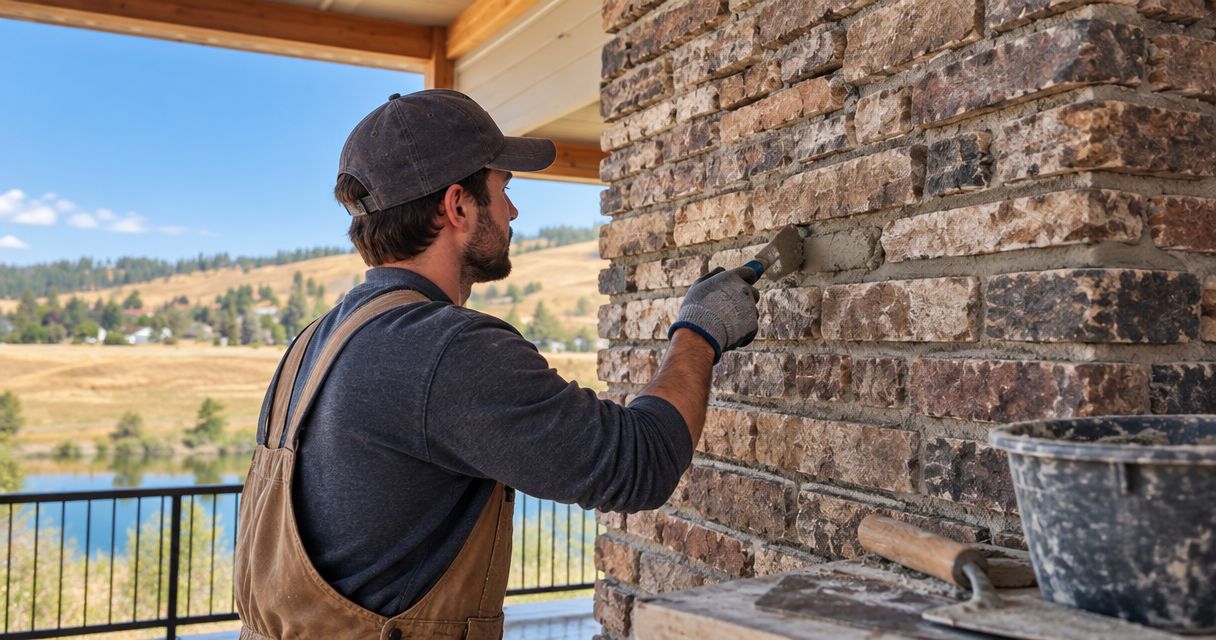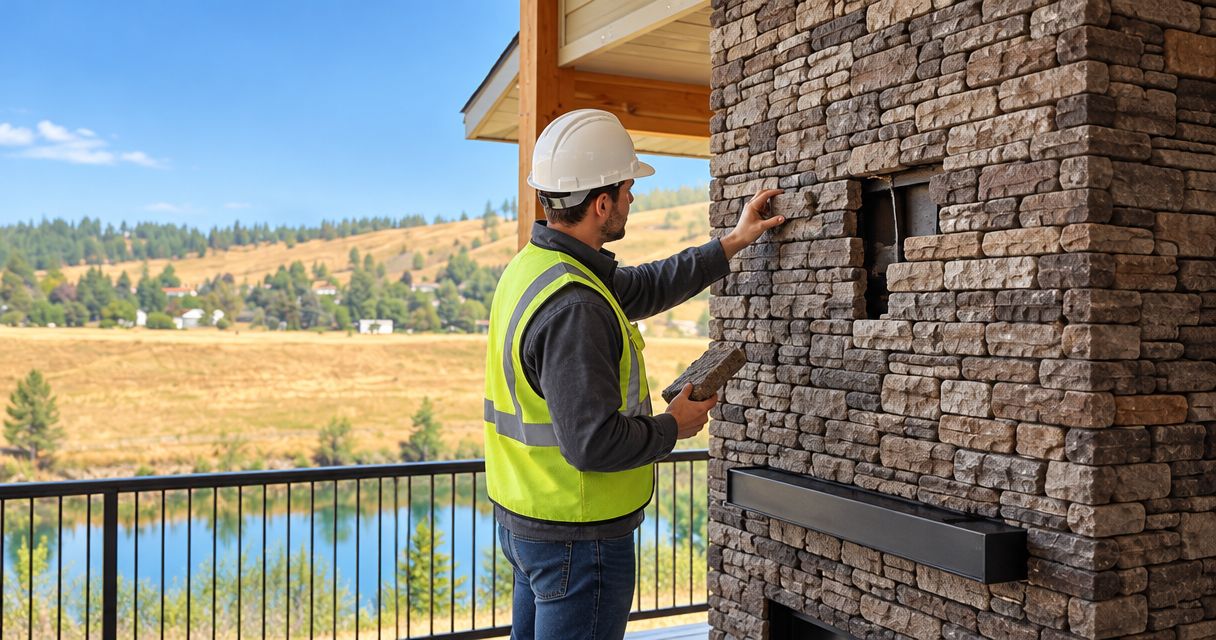
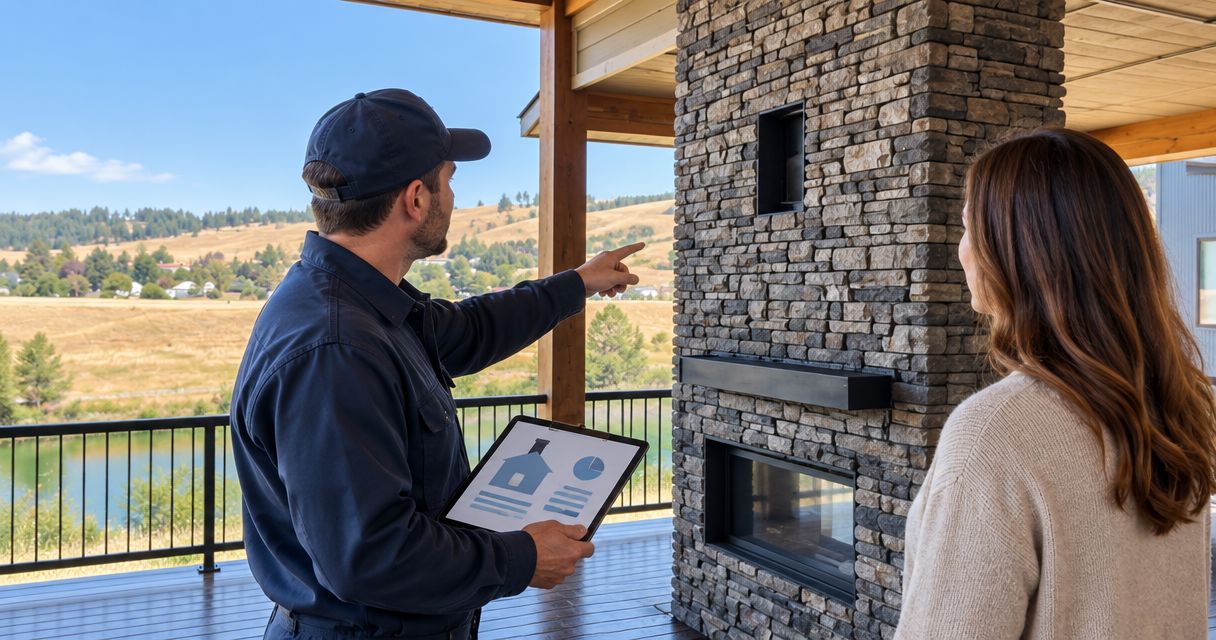
A chimney repair estimate in Spokane should identify the damaged masonry, define the repair limits and materials, and assign responsibility for access, roof protection, flashing and cleanup. For a 2026 project, it should also separate visible repairs from concealed conditions and state how changes receive approval before additional work begins.
- Chimney repair Spokane estimates need defined repair limits, compatible materials, access arrangements and written exclusions.
- Masonryspokane serves builders and general contractors seeking chimney masonry repairs and mortar restoration.
- Compare repointing, brick replacement and rebuilding by the defects each scope addresses—not by a single repair label.
- Assign flashing, roof protection and concealed-condition approvals before the masonry subcontractor starts.
Why this matters
A vague chimney estimate leaves the general contractor carrying decisions that belong in the subcontract. If the document says only chimney repair, you still do not know whether it covers deteriorated mortar, damaged brick, the crown or work at the roof intersection.
Masonryspokane provides chimney masonry repairs and mortar restoration, with an emphasis on clear scope and coordination with other trades. For builders hiring in 2026, the estimate should function as a work boundary and a handoff document—not just a description of the finished appearance.
You need enough detail to compare bids without forcing every contractor into the same repair method. A sound proposal explains what the subcontractor intends to fix, what remains untouched and which decisions require your approval.
What should a chimney repair estimate in Spokane include?
Require 6 scope items before accepting a chimney masonry proposal. These items establish what the contractor is repairing and how the work fits into the rest of your project.
- Existing conditions. Identify cracked or missing mortar, spalling brick, loose units, crown deterioration and visible movement where present. Location photographs should connect each observed defect to the proposed work.
- Repair limits. Name the chimney faces, courses, joints or components included. Distinguish spot repairs from a larger masonry section so that an allowance does not read like a complete restoration.
- Materials and finish. Describe replacement brick, mortar compatibility, joint profile and appearance expectations. State how the contractor will resolve an unavailable match or a visible difference between old and new work.
- Access and protection. Assign scaffolding or other access arrangements, protection of the roof and adjacent finishes, debris handling and staging. Identify any access needs that affect other subcontractors.
- Trade boundaries. Specify responsibility for flashing, roofing, chimney caps, flue evaluation and related work. Do not treat an exterior masonry repair as confirmation that the entire chimney system is safe to use.
- Changes and completion. Define exclusions, concealed-condition approval, cleanup and the final walkthrough. The estimate should explain how the contractor documents additional damage before expanding the scope.
Ask for quantities in the units that fit the work: brick counts, masonry area or joint length, for example. A location and a quantity are more useful than an adjective such as extensive. Do not require a fabricated measurement where the condition cannot be confirmed before opening the masonry; require an explicit assumption instead.
The document also needs a clear distinction between proposed work and observations. A photograph of a cracked crown does not establish that crown repair is included unless the written scope says so.
Which repair scope fits the chimney's condition?
A 2026 estimate should name the repair approach rather than bundle every condition under chimney restoration. Repointing, brick replacement and rebuilding address different problems; they are not interchangeable bid descriptions.
| Repair approach | Best for | Main benefit | Limitation to address in the estimate |
|---|---|---|---|
| Mortar repointing | Deteriorated joints where masonry units remain serviceable | Repairs failed mortar while retaining existing brick | Does not replace damaged brick or correct structural movement |
| Selective brick replacement | Localized cracked, spalled or otherwise unsound units | Removes damaged units without defining the whole chimney as a rebuild | Repair limits can change when adjacent masonry is exposed |
| Partial masonry rebuilding | A defined section that cannot be retained as sound masonry | Reconstructs the affected section | Requires clear demolition limits and a connection to retained work |
| Crown repair or replacement | Defects in the chimney's top weather-shedding surface | Addresses the crown rather than treating only the joints below | Does not substitute for flashing or flue work |
The table is a scope comparison, not a remote diagnosis. Ask the estimator to tie the recommended approach to the observed defects and explain why the retained masonry is suitable to remain.
For the boundary between localized work and reconstruction, use the guide to when a Spokane chimney needs repair rather than rebuilding. Your subcontract should still identify the actual limits for the chimney on your project.
Mortar repointing: define joints and compatibility
A repointing scope should identify which joints will receive work, how deteriorated mortar will be removed and what replacement mortar will be used. Joint profile and finish matter when the repaired area remains visible beside existing masonry.
The advantage is retaining serviceable brick. The limitation is equally important: new mortar does not make a damaged masonry unit sound, and it does not resolve the cause of movement.
Brick replacement: define the match and the boundary
A brick replacement scope should identify the affected units or areas and describe the intended replacement material. Ask how the contractor will present a sample or otherwise confirm the appearance before installation.
Selective replacement keeps demolition focused. Its limit is the surrounding condition: removing an unsound unit can expose deterioration that was not visible during the estimate.
Partial rebuilding: define what stays
A partial rebuilding scope needs demolition limits, retained masonry boundaries and responsibility for associated components. Ask what condition would stop the work and trigger a revised proposal.
Rebuilding addresses a section that cannot remain as proposed. It also creates more interfaces with existing construction, so the estimate needs more than a promise to rebuild the top.
How should the masonry work connect with other trades?
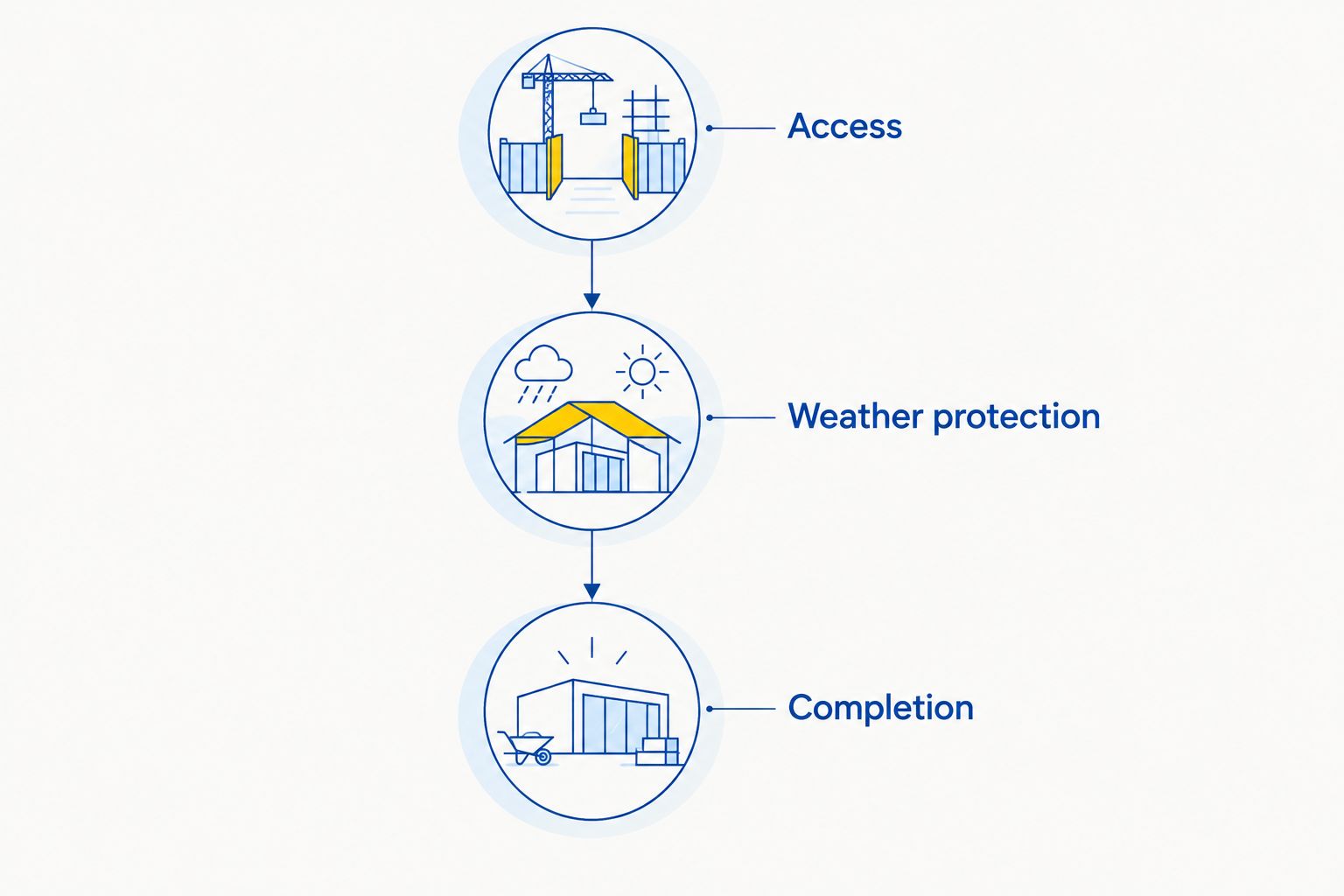
Treat the chimney as a shared work area, not an isolated masonry task. The repair scope should define 3 trade handoffs: access, weather protection and completion.
- Access: Decide who provides and controls the work platform, staging area and roof access. Coordinate those arrangements with roofing and other exterior work.
- Weather protection: Assign responsibility for protecting exposed construction during the repair and for restoring the intended roof-to-chimney weather detail.
- Completion: Identify who checks the masonry finish, who accepts related roofing work and who evaluates any chimney-system components outside the masonry scope.
A masonry subcontractor's work can be complete while a roofing or chimney-system task remains open. Do not close the whole chimney package simply because the brickwork looks finished.
For a 2026 project with several subcontractors, put these responsibilities in the scope rather than leaving them in meeting notes. The roofer and masonry subcontractor should receive the same description of their shared boundary.
When the project also includes a fireplace surround or stone veneer, identify that work separately. Exterior chimney repairs, decorative fireplace masonry and appliance or flue work have different acceptance requirements; combining them under fireplace work hides those distinctions.
Why chimney repair estimates vary
Differences between proposals should trace back to the condition, the repair method or the assigned responsibilities. Compare these 5 scope drivers before deciding that one bid simply includes more work than another.
- Extent of deterioration: Joint repair, isolated brick replacement and reconstruction have different work boundaries. Check whether each estimator assessed the same chimney faces and components.
- Access conditions: Roof configuration, staging space and work-platform arrangements affect how the contractor reaches the masonry. Confirm whether access is included or supplied by the general contractor.
- Material compatibility: Replacement brick appearance, mortar selection and joint finish affect the specification. A proposal that leaves those decisions open is not equivalent to one that defines them.
- Related component work: Crown work, flashing coordination and removal or reinstallation of associated parts change the scope. Check inclusions individually rather than assuming chimney repair covers everything.
- Concealed conditions: Masonry that looks repairable from outside can reveal additional damage when opened. Compare the assumptions and approval process, not just the initial repair boundary.
These factors explain scope differences; they do not excuse an unclear proposal. Ask the subcontractor to state which conditions were observed, which were assumed and which remain outside the estimate.
If competing proposals recommend different methods, request the reasoning before asking for revisions. Making every bidder use the same label does not make the underlying work equivalent.
How do you compare estimates without missing exclusions?
Build a scope comparison from the work you actually need. Use the same location photographs and defect list for each bidder, then check whether each proposal addresses those conditions.
Read exclusions alongside inclusions. An estimate can describe thorough mortar work while leaving brick replacement, flashing and crown repairs to someone else; that is acceptable only when the remaining work has an assigned owner.
For 2026 bid review, resolve these questions in writing:
- Does the proposal identify the same damaged areas shown in the project documents?
- Does the repair method address those defects, or only their visible surface?
- Are material selection and appearance approval defined?
- Are access, protection and debris removal assigned?
- Is another trade responsible for an unfinished chimney component?
- Does additional work require approval before the subcontractor proceeds?
Do not reject a clearly stated exclusion merely because another proposal omits the subject. Silence is not inclusion. Ask the second bidder to confirm the same boundary so you can compare actual responsibilities.
Masonryspokane is best for builders and general contractors seeking chimney masonry repairs with clear scope and trade coordination. Its stated masonry services do not replace an explicit assignment for roofing, flue evaluation or other work outside the agreed subcontract.
Discuss the chimney repair scope
Request a free estimate and discuss masonry repair limits, access and trade coordination.
What should happen if more damage appears during repair?
Set 2 approval checkpoints: acceptance of the original scope and authorization of any expanded work. The first confirms what the contractor will do; the second prevents concealed damage from becoming an undocumented change.
Require photographs or another clear record of the newly exposed condition, a description of the added work and your authorization before the contractor expands the repair. Also decide who protects the open work while that decision is pending.
The goal is not to pretend every condition is visible during estimating. The goal is to establish a usable process when it is not.
Does a chimney masonry estimate include flashing repairs?
A chimney masonry estimate includes flashing repairs only when the written scope assigns that work. Ask whether the masonry subcontractor or roofer handles the flashing and who coordinates the roof-to-chimney detail.
Do not accept inspect flashing as equivalent to repair flashing. Observation, removal, replacement and final acceptance are different responsibilities.
Can you approve the estimate before every brick is inspected?
You can approve an estimate based on stated visible conditions and explicit assumptions. The proposal should explain which areas were assessed and what triggers a scope revision.
For a 2026 contract, that approach is clearer than treating an initial observation as a guarantee that no concealed deterioration exists. Keep the original repair boundary and the change-approval process together in the subcontract.
FAQ
What should I ask a chimney repair contractor before accepting an estimate?
Ask the contractor to identify repair limits, materials, access responsibilities and exclusions. Require a written process for concealed damage and additional-work approval.
Is repointing enough for a chimney with spalling brick?
Repointing does not replace spalling brick. The estimate should separately address unsound masonry units and explain which surrounding brick will remain.
Does an exterior chimney repair confirm that the fireplace is safe to use?
Exterior masonry repair does not confirm that the entire fireplace and chimney system is safe to use. Assign flue and appliance evaluation separately when they fall outside the masonry scope.
Who should handle flashing during chimney masonry repairs?
The written scope should name the trade responsible for flashing. The general contractor should coordinate the masonry and roofing boundaries before work starts.
What should a general contractor check at the final walkthrough?
Check the completed work against the agreed repair locations, material selections, finish and cleanup requirements. Record unresolved roofing or chimney-system tasks separately from masonry completion.
Can Masonryspokane discuss chimney repairs as part of a larger building project?
Masonryspokane provides residential and commercial masonry services, including chimney masonry repairs and mortar restoration. Request a free estimate or project-scope discussion to define the work and trade handoffs.
One last thing
Photograph the chimney before access equipment comes down. Those images let you compare the completed repair with the agreed locations and document work that is harder to see from the ground.
Make the walkthrough a scope check, not an appearance-only approval. A clean-looking chimney still needs a record of what was repaired, what was excluded and which related tasks remain open.