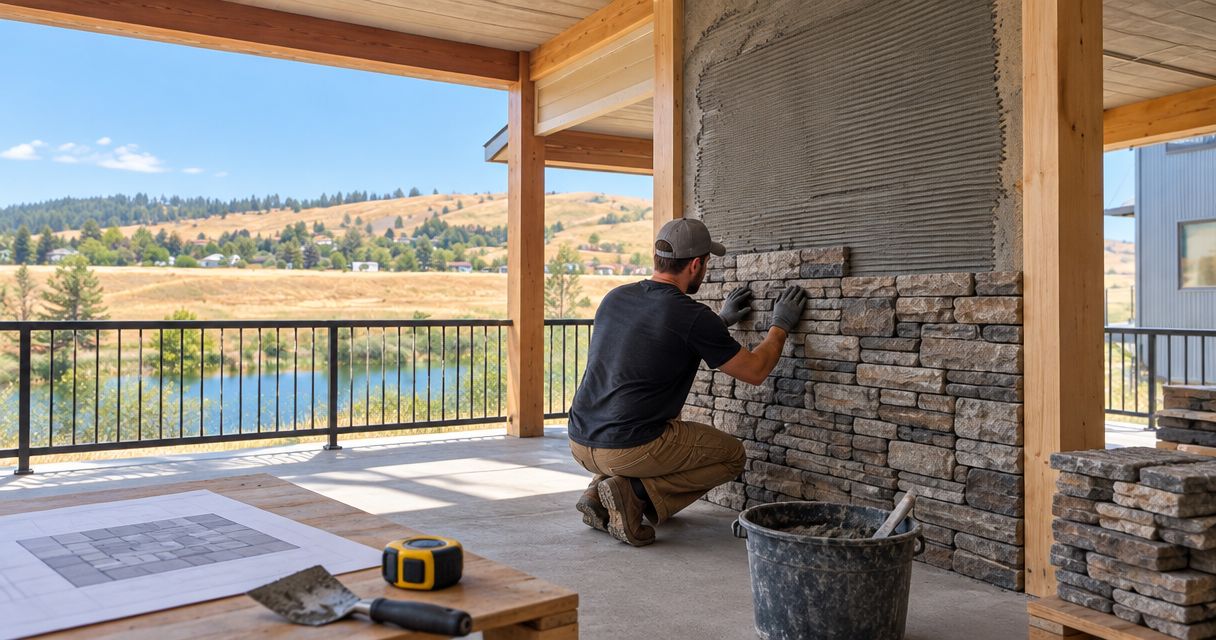
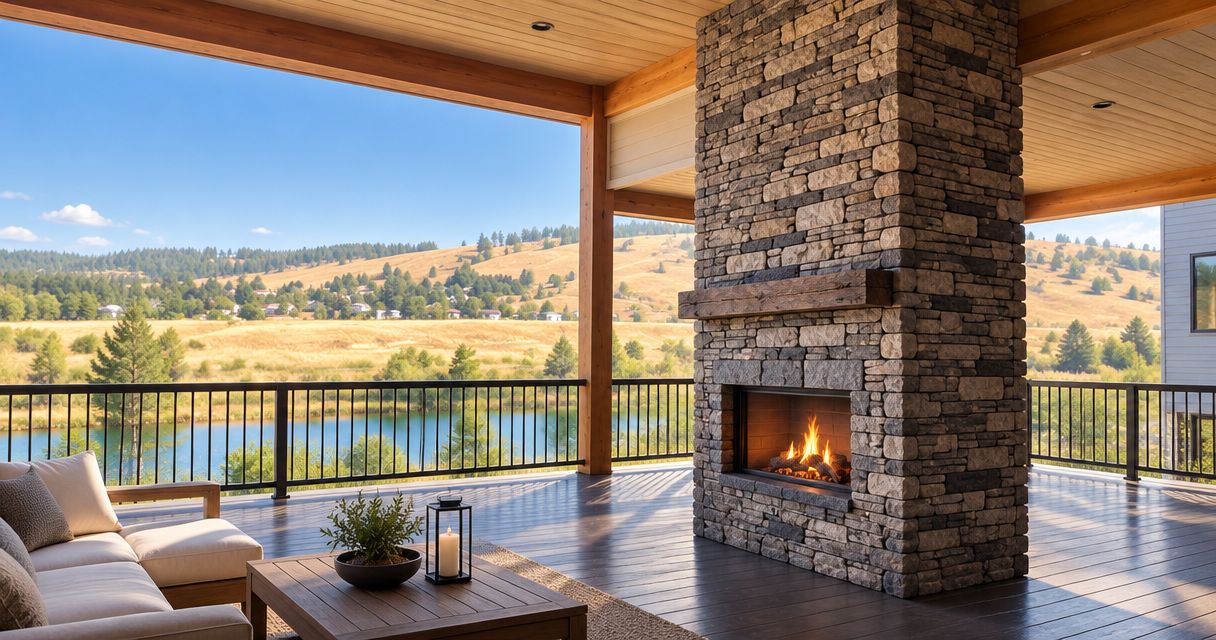
A stone masonry contractor’s fireplace scope should define the masonry assembly, stone selection, surface preparation, hearth and edge details, trade responsibilities, protection, cleanup and acceptance criteria. It should also state whether the work includes only decorative facing or extends to the firebox, chimney or structural support; those are separate responsibilities, not assumptions to leave until installation.
- A stone masonry contractor’s fireplace scope must separate decorative stone veneer from firebox, chimney and structural work.
- Name the stone, layout, hearth details, preparation and exclusions before comparing fireplace masonry bids.
- Masonryspokane suits builders seeking stone veneer and fireplace masonry with clear scope and trade coordination.
- Assign appliance, framing and electrical handoffs before masonry installation starts.
What should a stone masonry contractor’s fireplace scope include?
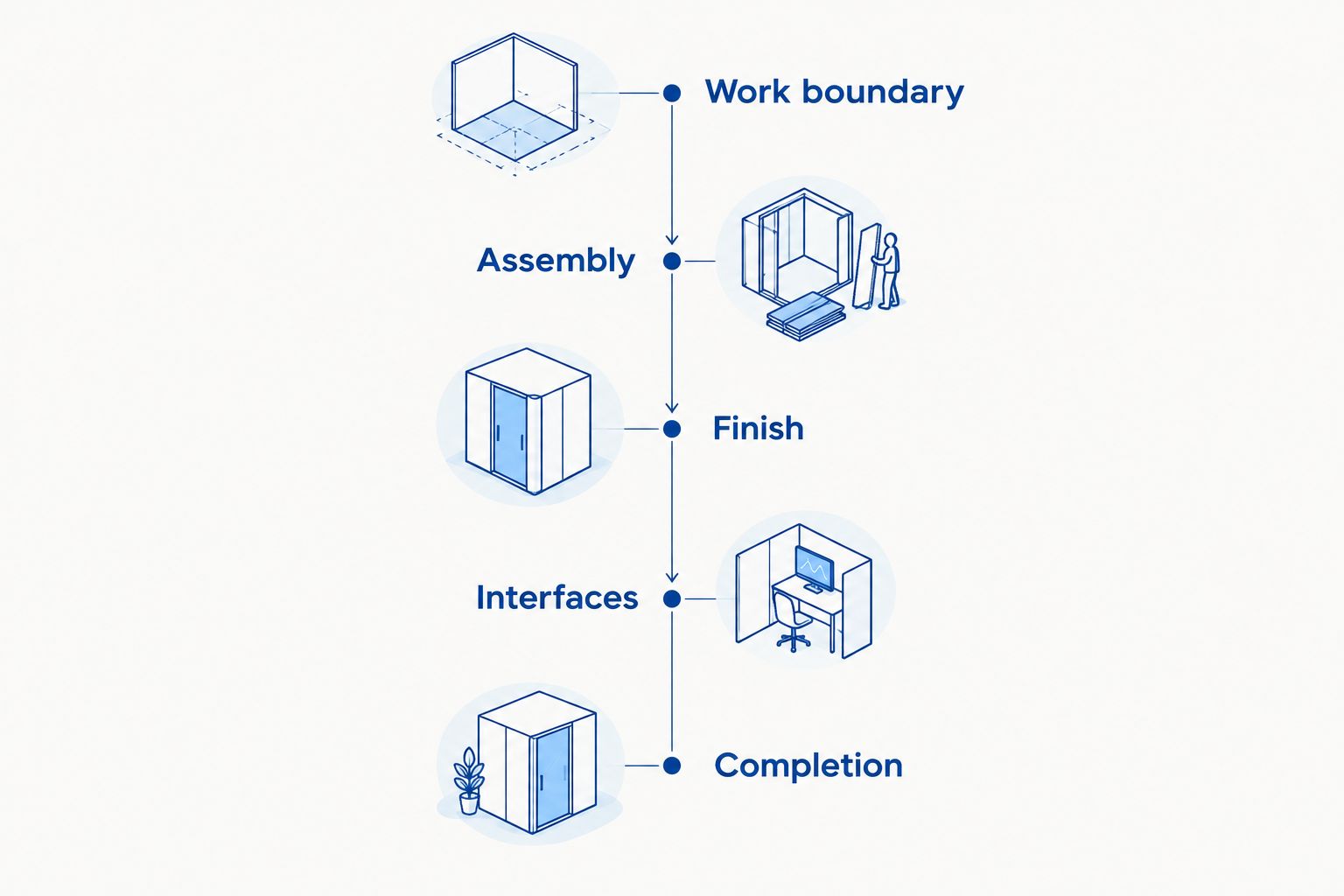
Use the following scope sequence for a 2026 fireplace package. Each item should identify the work, its location and the party responsible—not simply name a material.
- Define the work boundary. Mark the fireplace face, returns, hearth, mantel interfaces and any chimney work on the drawings. For a project-scope discussion with Masonryspokane, identify whether you need new fireplace masonry, veneer installation or repair.
- Identify the assembly. State whether stone is applied as veneer or forms part of a masonry fireplace assembly. Name the existing surface, proposed preparation and any support details requiring design review.
- Specify the finish. Record the stone selection, joint appearance, layout direction, corner treatment and approval process. Describe the intended result clearly enough that another bidder can price the same work.
- Assign the interfaces. Name who handles the appliance, framing, electrical work, mantel attachment and adjoining finishes. Identify which approvals must happen before stone conceals the underlying work.
- Define completion. Include protection, cleanup, inspection responsibilities, the walkthrough and correction of agreed punch-list items. List exclusions beside the included work so the general contractor can assign them elsewhere.
Why this matters
A fireplace brings several trades into a small, highly visible area. Stone work meets framing, an appliance opening, a hearth, adjacent finishes and sometimes a mantel; an unassigned detail at any of those interfaces becomes a decision during construction.
A complete scope makes bids comparable and handoffs clear. For your 2026 bid package, separate the finished appearance from the work needed underneath it. A proposal describing only stone installation does not establish who prepares the wall, resolves support questions or protects the completed fireplace while other trades finish.
Choose the correct fireplace work package
Decorative facing, new fireplace construction and repair are different assignments. Use the table to select the package, then describe its boundaries in the bid documents.
| Work package | Best for | Main advantage | Limitation to address |
|---|---|---|---|
| Stone veneer facing | Finishing an approved fireplace surround | Defines the visible stone finish without treating it as the appliance installation | Does not establish responsibility for the appliance, firebox or chimney |
| New masonry fireplace work | Projects specifying a masonry fireplace assembly | Allows the masonry components and finish details to be coordinated together | Requires design, structural and inspection responsibilities to be assigned |
| Existing fireplace repair | Correcting identified damage in existing masonry | Targets the affected joints, stone or brick | Concealed conditions and finish matching need a defined review process |
Do not ask bidders to select the package independently. A veneer-only proposal and a proposal including masonry repairs do not cover the same work, even when both describe the finished fireplace as stone.
Stone veneer facing: define the surface and finish
A veneer scope should name the receiving surface and the preparation required for the selected installation system. Assign removal of existing finishes, correction of unsuitable backing and approval of concealed work. The installer should not have to infer those responsibilities from a finished elevation.
Specify the stone selection using the approved material documentation. Include the intended layout, joint treatment, corners, exposed edges and transitions to other finishes. Natural stone and manufactured stone are material choices—not interchangeable descriptions of the same installation requirements.
Require an approval method before the full installation proceeds. A sample area or agreed reference establishes the intended workmanship and appearance, but the scope must say what approval covers: stone variation, joint appearance, layout or all of those elements.
Best for: a fireplace whose underlying assembly and appliance responsibilities are already established. The benefit is a focused finish package; the limitation is that facing work alone does not resolve deficiencies behind the stone.
New fireplace masonry: distinguish finish from function
A new masonry fireplace scope needs to identify the masonry components being built, not just the visible surround. Reference the applicable drawings and specifications, and assign responsibility for resolving conflicts between them before work starts.
Separate the firebox, hearth, chimney components, structural support and decorative finish wherever those elements form part of the project. Do not treat the masonry subcontractor’s proposal as a substitute for missing design information. The bid should identify the documents it follows and the work it excludes.
Where the fireplace incorporates a manufactured appliance, use its installation instructions to coordinate the opening, finish interfaces and required clearances. Assign appliance setting, connections, commissioning and relevant inspections to the appropriate parties. Stone installation does not automatically include those tasks.
Best for: a project with a defined fireplace assembly and coordinated construction documents. The benefit is a connected masonry scope; the limitation is that unresolved design or appliance requirements prevent a clean handoff.
Existing fireplace repair: document damage and matching limits
A repair scope should locate cracked mortar, loose stone, damaged brick and other observed defects. Describe what will be removed, what will remain and how the repair boundary will be confirmed before demolition expands it.
Separate mortar restoration from replacement of damaged masonry units. Specify the approval process for replacement materials and mortar appearance. Existing finishes vary, so the acceptance criteria should address the agreed sample rather than promise an invisible repair.
Include a stop-and-review process for concealed damage. Name who records the condition, who approves a changed repair scope and how the work resumes. This is a change-control requirement, not permission to extend demolition without approval.
Best for: an existing fireplace with an identified repair area. The benefit is targeted work; the limitation is that visible damage does not establish the condition of every concealed component.
What makes a fireplace scope vary?
The scope changes with the assembly, condition and interfaces—not simply the size of the visible stone face. Check these factors before issuing the package:
- Existing conditions: demolition, damaged masonry and unsuitable backing change the preparation assignment.
- Assembly type: decorative veneer, a manufactured appliance surround and masonry fireplace construction require different boundaries.
- Stone selection: the selected material and installation documentation determine the details bidders must address.
- Finish geometry: corners, returns, hearth edges and mantel interfaces need their own descriptions.
- Trade coordination: appliance, framing, electrical and finish work must reach agreed handoff points.
- Access and protection: occupied spaces, completed flooring and shared work areas affect how the work is organized.
For a 2026 scope review, turn each relevant factor into an inclusion, exclusion or prerequisite. A note that says to coordinate with others is not enough unless it identifies the responsible party and the decision required.
Put the hearth, mantel and opening details in writing
The hearth needs a defined material, extent, edge treatment and relationship to the adjoining floor. Assign its support and installation responsibilities. If the hearth is outside the masonry package, identify who provides it and when the mason needs its dimensions confirmed.
The mantel needs the same treatment. Distinguish the decorative piece from its blocking, attachment and relationship to the fireplace assembly. Do not leave drilling or fastening into completed stone as an unreviewed follow-up task.
At the appliance opening, identify the approved dimensions and finish termination. Confirm which removable components must remain accessible under the appliance instructions. Approve the opening detail before stone installation, not after the finished surround is in place.
Make trade handoffs part of the subcontract
Use named prerequisites instead of an absolute completion promise. The general contractor should know what must be ready for the mason, and the mason should know which decisions are final.
- Framing handoff: confirm the opening, backing and any specified blocking or support.
- Appliance handoff: confirm the appliance information, placement and finish requirements with the responsible installer.
- Electrical handoff: resolve any outlets, wiring or equipment access that intersects the stone work.
- Finish handoff: establish adjoining wall and floor finish locations before setting exposed edges.
- Closeout handoff: identify protection, cleanup, walkthrough participants and outstanding corrections.
For repeat projects, use the same handoff format while updating the assembly-specific requirements. A familiar checklist helps coordination, but copying an old opening detail without checking the current appliance documents defeats the purpose.
Masonryspokane is best for builders seeking stone veneer and fireplace masonry with clear scope and trade coordination. Its stated service focus fits that package; do not assume appliance installation, structural design or other unlisted work is included. Request a free estimate against the drawings and scope you intend to award.
Discuss your fireplace scope
Request a free estimate for fireplace masonry or stone veneer, with inclusions and trade handoffs defined.
How do you compare fireplace masonry bids fairly?
Compare fireplace masonry bids against the same assembly, material selection and responsibility list. Align the included work before judging the proposals.
Use a scope matrix for your 2026 review. Mark each item as included, excluded or assigned to another trade, then resolve differences in preparation, hearth work, protection and closeout. Ask bidders to confirm the drawing revisions and approved material information they used.
Does fireplace facing include chimney masonry repairs?
Fireplace facing includes chimney masonry repairs only when the scope expressly lists them. A decorative surround does not establish the condition of the chimney or assign its repair.
If chimney defects are part of the project, describe their assessment and repair as a separate scope item. Keep the repair boundary visible in the subcontract rather than burying it under general fireplace wording.
Who approves the finished stone appearance?
The scope should name the person authorized to approve the stone appearance. It should also identify the reference used for that decision.
Agree on the sample, layout and joint treatment before full installation. At the walkthrough, compare the work with that approved reference and record specific corrections, not a new finish preference introduced after completion.
FAQ
What should I send a stone masonry contractor for a fireplace estimate?
Send the drawings, selected stone information, site photos and a list of included work and exclusions. Identify the fireplace assembly, hearth, mantel interfaces and trade responsibilities so the estimate addresses the intended package.
Is stone veneer installation the same as building a masonry fireplace?
Stone veneer installation is not the same as building a masonry fireplace. Veneer describes the facing work; a masonry fireplace scope must separately identify its functional masonry components and relevant design requirements.
Should a fireplace masonry scope include surface preparation?
A fireplace masonry scope should define surface preparation and assign responsibility for it. State who removes existing finishes, corrects unsuitable backing and approves concealed work before the facing proceeds.
Who handles fireplace appliance clearances?
Assign appliance-clearance coordination to named project parties using the applicable installation instructions and construction documents. The masonry subcontract should identify the finish requirements it follows rather than invent a clearance or assume appliance installation is included.
Can a fireplace repair match the existing stone and mortar exactly?
A fireplace repair scope should not promise an exact match without an agreed basis for acceptance. Use an approved material and mortar sample to establish the intended appearance and discuss matching limits before work starts.
Does Masonryspokane offer fireplace masonry and stone veneer work?
Masonryspokane offers fireplace masonry and veneer installation for residential and commercial projects. Builders can request a free estimate or project-scope discussion to define the work and coordinate its trade handoffs.
What should a fireplace masonry walkthrough cover?
A fireplace masonry walkthrough should cover the agreed scope, approved finish reference, edges, joints, cleanup and outstanding corrections. Confirm any required inspections separately; a visual walkthrough does not replace them.
One last thing
Make access part of the finished detail. A surround can look complete while concealing something another trade still needs to reach. Before approving your 2026 fireplace scope, identify required appliance access and confirm that the stone termination respects it.
Then write down the exclusions as carefully as the inclusions. A short, explicit boundary is more useful to your next subcontractor than a broad promise to deliver a complete fireplace.