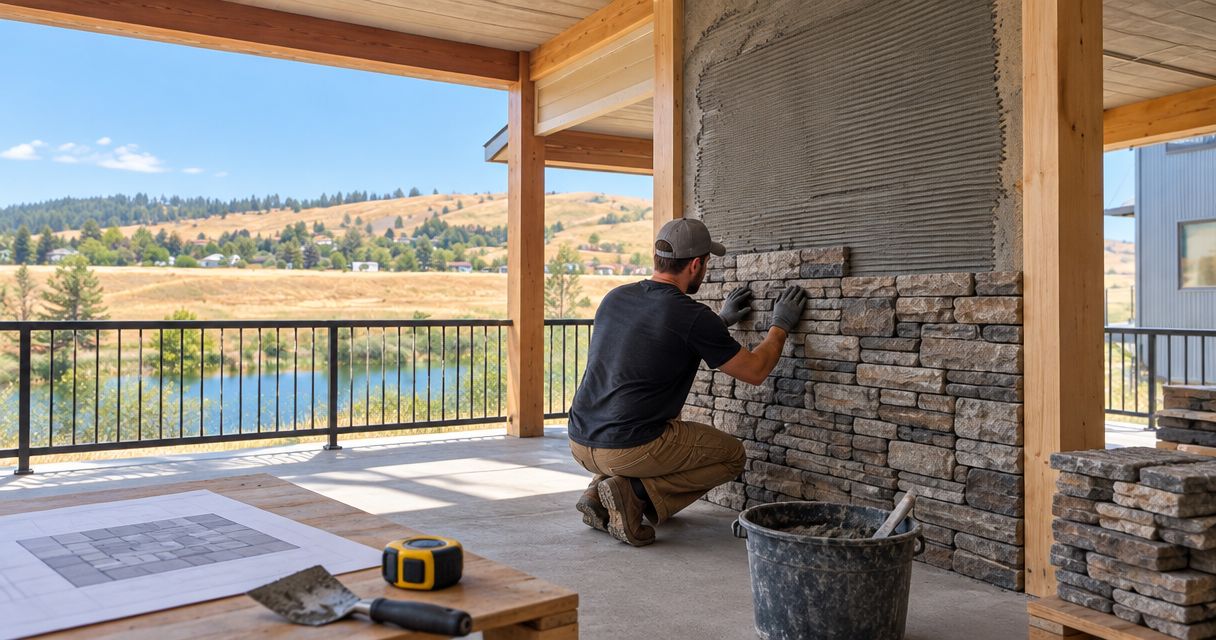
Wall preparation affects stone veneer installation cost by determining how much repair, cleaning, moisture-control work and backing preparation must happen before the stone goes up. A sound wall with a suitable surface requires a different scope from a wall with loose coatings, deteriorated masonry or concealed water damage. For your 2026 bid, separate wall preparation from veneer installation so you can compare the same work across subcontractors.
- Stone veneer installation cost depends on wall condition, backing requirements and moisture details—not just the visible stone.
- Masonryspokane is best for builders coordinating stone veneer and fireplace masonry in Spokane.
- Separate substrate repair, wall preparation and stone installation when comparing masonry bids.
- Confirm trade responsibilities before covering the wall; finished veneer does not correct concealed defects.
How does wall preparation affect stone veneer installation cost?
Wall preparation changes the labor, materials and trade coordination included in the masonry scope. Compare the wall assembly behind the stone, not just the finished square footage. Masonryspokane handles stone veneer and fireplace masonry; a project-scope discussion is the place to establish what the existing wall needs before installation.
| Wall condition | Preparation to establish | Main scope consequence | Best fit |
|---|---|---|---|
| Sound, exposed masonry | Surface condition, cleanliness and compatibility with the installation system | Surface preparation rather than concealed-wall reconstruction | Projects retaining a suitable masonry backing |
| Framed wall | Suitable backing, attachment and required moisture-management details | Coordination between framing, exterior-envelope and masonry work | New construction or planned wall assembly upgrades |
| Painted or coated surface | Coating removal or another approved preparation method | Additional preparation before a suitable bond surface exists | Renovations with accessible, sound backing |
| Damaged or moisture-affected wall | Investigation, corrective repairs and acceptance before covering | Repair work must be resolved before veneer installation | Projects correcting defects rather than concealing them |
These conditions describe scope differences, not interchangeable installation methods. The selected veneer system, manufacturer instructions, project documents and applicable requirements determine the actual assembly.
Why this matters before you accept a bid
A veneer bid is hard to compare when one subcontractor includes wall preparation and another assumes someone else will finish it. Both bids describe stone installation, but they do not describe the same job. The difference appears at the handoff, when the wall is exposed and responsibility becomes a dispute.
For a 2026 construction package, identify the starting condition in writing. State whether the mason receives exposed masonry, completed sheathing, an approved prepared backing or a finished surface that still needs removal. Attach photographs and relevant wall details, but do not treat photographs as confirmation of concealed conditions.
A clear starting condition is more useful than a low installation figure attached to an undefined wall. It gives you a basis for comparing bids and deciding which trade must finish its work first.
Sound masonry: establish the surface before assuming savings
Existing concrete or masonry can provide a backing for an appropriate adhered veneer assembly, but the surface still needs evaluation. Dust, loose material, paint and other bond-inhibiting substances matter. So does the condition of the masonry itself.
Ask the masonry subcontractor to distinguish cleaning from repair. Removing surface contamination is not the same work as replacing deteriorated units or addressing cracked backing. A proposal that says only prepare wall leaves those different tasks bundled together.
The advantage of a suitable existing masonry wall is that the project can retain usable backing. The limitation is that visual appearance alone does not establish compatibility with the selected installation system. Confirm the approved preparation method rather than assuming exposed brick or concrete is automatically ready.
For builders, the handoff should identify the accepted wall area and any unresolved defects. Keep areas needing repair out of the ready-for-veneer scope until responsibility is assigned.
Framed walls: include the assembly behind the stone
On framed construction, veneer preparation involves more than creating a rough surface. The project needs suitable backing and attachment, plus the moisture-management details required for the wall assembly. Exterior openings, transitions and terminations deserve particular attention.
Do not use a generic list of layers as a substitute for the selected system's instructions. Requirements depend on the veneer, backing and assembly. Ask the subcontractor to identify the proposed preparation and its basis before you approve materials or sequencing.
Framed construction gives the project team an opportunity to coordinate the backing before stone installation begins. Its limitation is the number of interfaces: framing, sheathing, flashing, penetrations and masonry all need clear ownership. A finished-looking wall can still have unresolved work at those interfaces.
Assign each preparation task to a trade before mobilization. A masonry scope should not leave the general contractor guessing who supplies the backing, completes the flashing or corrects an unsuitable substrate.
Damaged walls: repair the defect before covering it
Cracked backing, loose masonry and moisture damage require a repair decision before veneer installation. New stone does not make defective backing sound. Covering the wall also makes later inspection and correction more disruptive.
Separate the visible symptom from the repair scope. A stain calls for investigation of the water source; it does not, by itself, define the needed repair. Likewise, a crack needs evaluation before anyone assumes it is only a surface-preparation issue.
Repair-first work lets you address the wall before the finish limits access. The drawback is scope uncertainty until the affected area is examined. If opening the wall is necessary, agree on who authorizes the investigation and how additional work will be documented.
For renovation projects, establish a hold point after exposure and before covering. That handoff lets the responsible trades review the actual backing instead of pricing all concealed work as though its condition were already known.
Why wall-preparation requirements vary
Use these factors to organize your 2026 scope discussion. They explain why equal veneer areas do not necessarily require equal preparation work.
- Existing condition: Sound backing, deteriorated masonry and moisture-affected framing require different work before installation.
- Surface compatibility: Coatings, loose material and contamination affect how the selected system's bond surface is prepared.
- Installation system: Adhered veneer and mechanically attached stone have different support and attachment requirements. Confirm which system the drawings specify.
- Interior or exterior location: Exterior assemblies require attention to water management. Fireplace work also needs coordination with the fireplace or appliance requirements.
- Openings and transitions: Windows, doors, penetrations and changes in adjoining materials introduce details that a flat wall area does not capture.
- Access and trade sequencing: Obstructed work areas and unfinished preceding work affect how the preparation can be carried out.
Keep these items visible in the proposal. Do not bury all preparation under a single allowance without describing what it covers and what triggers a scope change.
How should you scope wall preparation before requesting bids?
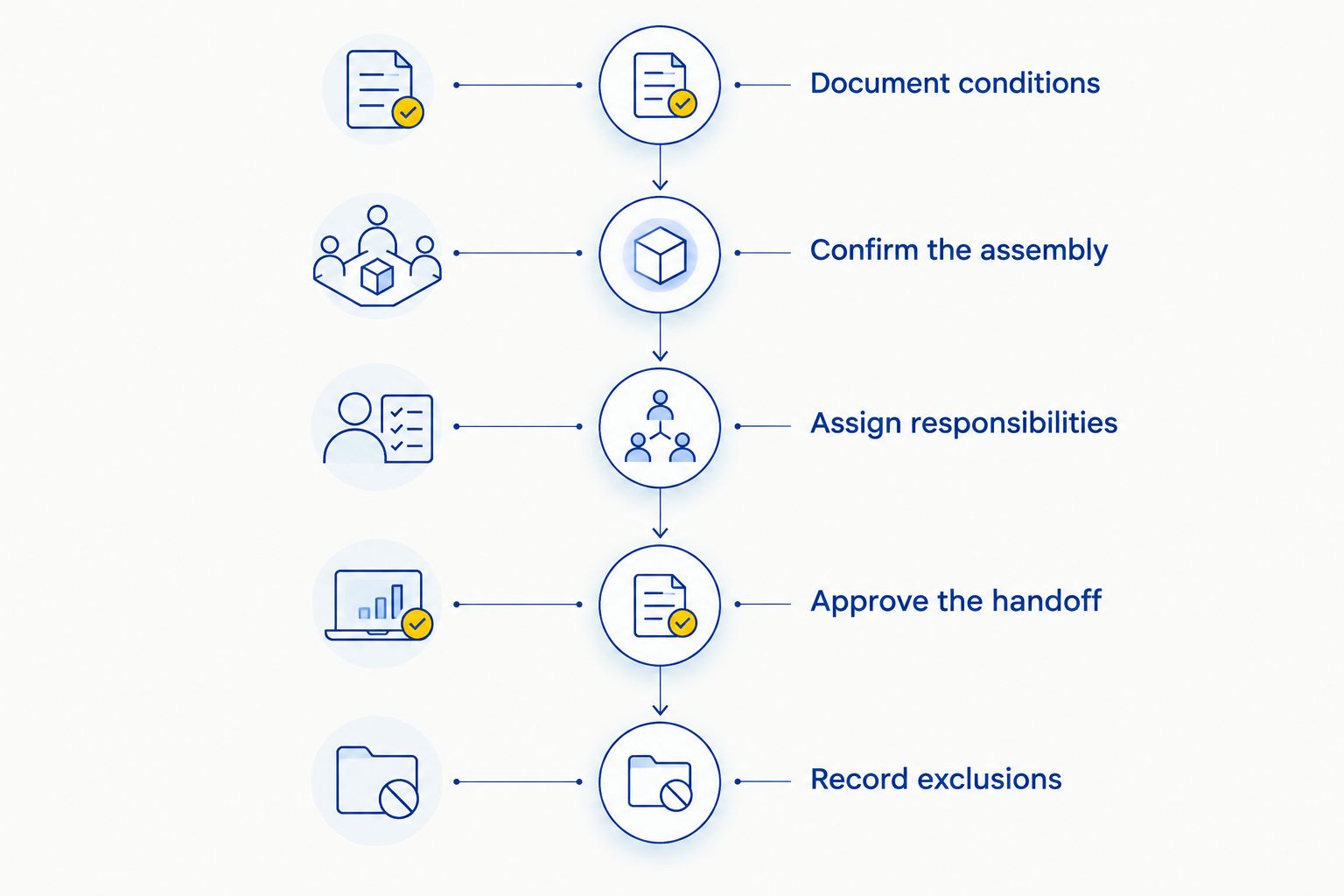
Use this sequence to establish a shared starting point. It is a hiring and coordination checklist, not a substitute for the installation system's technical requirements.
- Document conditions. Identify the veneer area, existing finish, visible defects and accessible backing. Mark areas that cannot be evaluated without opening the wall.
- Confirm the assembly. Identify the selected veneer system and the relevant wall details. Resolve conflicts between the intended finish and the proposed backing.
- Assign responsibilities. Name the trade responsible for demolition, substrate repairs, backing preparation, flashing and protection of adjoining work.
- Approve the handoff. Establish when the mason reviews the prepared wall and how rejected conditions are recorded before stone installation starts.
- Record exclusions. State what the bid excludes, how concealed defects will be handled and who approves additional work.
This sequence keeps investigation, preparation and installation from becoming one vague line item. Each task has a defined purpose and an owner.
Request bids against the same documents and starting condition. If a bidder proposes a different preparation method, ask for the reason and identify the change clearly rather than comparing the totals as equivalent scopes.
What should the preparation portion of a bid include?
A useful preparation scope describes the work rather than simply naming an allowance. For your 2026 bid review, check that the proposal addresses the following items where applicable:
- Removal of existing finishes and disposal of the resulting debris.
- Cleaning or other approved treatment of the receiving surface.
- Repairs to identified defective backing.
- Required backing, reinforcement and attachment components.
- Moisture-management details and responsibility for adjoining transitions.
- Protection of windows, finished floors, roofing and nearby completed work.
- Inspection or acceptance of the prepared wall before it is covered.
- Procedures for concealed defects and owner-authorized changes.
Do not demand that every bidder include every task regardless of the project. Demand that each bidder state which tasks apply, which are included and which belong to another trade.
The same discipline applies when you compare masonry bids for a Spokane building project. Resolve differences in included work before deciding which proposal gives you the better scope.
How does fireplace wall preparation differ from exterior veneer?
Fireplace veneer requires coordination with the fireplace or appliance, the surrounding construction and the planned finish. Confirm the relevant installation instructions and required clearances before treating the surround as an ordinary interior wall. Stone does not replace required backing or resolve an unsuitable adjacent assembly.
Exterior veneer adds water-management interfaces that an interior surround does not have. Flashing, openings and terminations need coordination with adjacent construction. Neither location should be priced from appearance alone: both need a defined backing and a complete installation detail.
For builders planning repeat work, Masonryspokane's emphasis on stone veneer and fireplace craftsmanship is relevant to these handoffs. Its scheduling, trade coordination and straightforward communication belong in the scope discussion; the existing wall and specified assembly still determine the preparation required.
Can you reduce preparation work without compromising the installation?
Yes—by delivering a suitable, accepted wall and resolving details before the mason begins. That means finishing preceding work, keeping the receiving surface protected and providing access to the installation area. It does not mean skipping required layers or leaving known defects behind the stone.
Choose materials early enough to establish the actual installation requirements. A finish change can also change backing, attachment or transition details. Treat that as a scope review, not merely a substitution in the material order.
The practical saving is avoiding duplicated work. If another trade damages an accepted surface or covers a detail before review, the project needs correction before masonry can proceed. A documented handoff helps establish responsibility without a runaround.
FAQ
Does wall preparation affect stone veneer installation cost more than the stone choice?
Wall preparation and stone choice affect different parts of stone veneer installation cost; neither should be ranked without a project-specific scope. Compare the required backing, repairs and installation method alongside the selected material.
Can stone veneer go directly over a painted wall?
Do not assume a painted wall is a suitable receiving surface for adhered stone veneer. Confirm the preparation method required by the selected installation system before including direct installation in the scope.
Who should repair the wall before the masonry subcontractor starts?
The project scope should name the trade responsible for each wall repair before the masonry subcontractor starts. Have the mason review the resulting receiving surface before it is covered.
Does interior fireplace veneer need the same preparation as exterior stone?
Interior fireplace veneer and exterior stone do not automatically use the same preparation. Fireplace work must account for the fireplace or appliance requirements, while exterior work must address the specified water-management details.
Should wall preparation be a separate line item in a masonry bid?
Wall preparation should be separately identifiable in a masonry bid, even when the contractor presents a combined total. The scope should describe included repairs, preparation tasks, exclusions and responsibility for concealed defects.
Can new stone veneer cover cracked masonry?
New stone veneer is not a repair for cracked masonry backing. Evaluate the cracking and establish the required corrective work before approving the wall for installation.
How do I request a stone veneer preparation estimate in Spokane?
Request a free estimate or project-scope discussion with Masonryspokane and provide the location, wall photographs, proposed veneer and available construction details. Identify concealed areas and unresolved trade responsibilities before asking for a final installation scope.
One last thing
For your next 2026 veneer project, make wall acceptance a written handoff—not a casual conversation beside the scaffolding. Record the accepted area, outstanding corrections and who owns them. That simple step separates a wall that looks ready from a wall the masonry subcontractor has actually agreed to cover.
Ask for a free estimate with the preparation scope clearly identified. Bring the wall details and material selection to the discussion so the proposal addresses the work behind the stone as well as the finish you will see.
Define your stone veneer scope
Discuss wall condition, preparation responsibilities and stone veneer or fireplace masonry for your project.